Table of Contents

Why should we care?

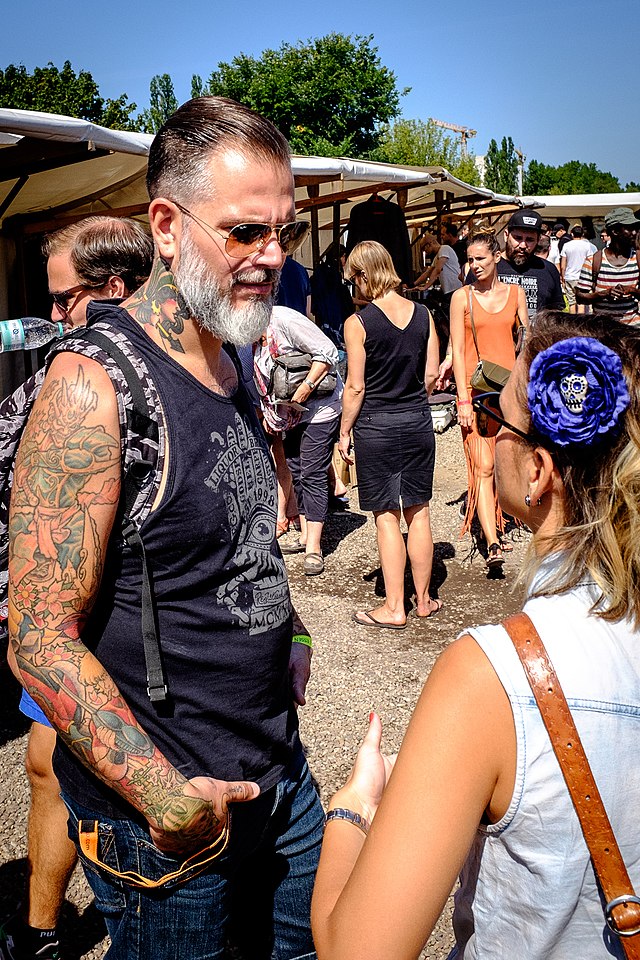
An older man in a black tank top with a full sleeve of tattoos and a gray beard talks to a woman who is nearly off screen.
Older punk person talking at an event

Subcultural research has historically been centered around younger men (and sometimes women), but people don’t suddenly drop off the subcultural face of the Earth when they turn 30. Some become less involved in the subculture, but still incorporate values and habits from it in their adult lifestyle. Others continue to actively participate in events and activities within the subculture but may face stigma surrounding their age. By broadening our understanding of subcultures beyond youth, we get a fuller picture of how people of all ages continue to engage directly and indirectly with subcultures or their values.

In addition to the insights it offers for subcultural studies, looking into how subculturists age also provides information on the social construction of age. These individuals challenge the mainstream ideas of what adults should do and question why society has those ideas set up in the first place.  This helps in understanding how age is created as distinct social categories with their own expectations (Bennett & Hodkinson, 2013). 

~~~

Some expectations of individuals who are deemed “adults” include:

-> not staying out late 

-> hanging out with people your own age

-> holding down a regular job

-> maintaining a “normal” fashion sense and hairstyle

-> not going to youth-dominated spaces like bars, clubs, and festivals

These things aren’t necessarily off limits for adults, there’s often just more judgement that occurs when someone doesn’t follow the social norms for their age. There are also factors that go beyond social ones when considering these age-specific social norms. An older person may not be able to physically go to a weekend long festival or stay up all night for a show, but these physical limitations do not account for all of the pressure to adopt a normal adult lifestyle. 

~~~

Stigma

As mentioned above, older participants within subcultures tend to clash with the ideas society has about what adults should and shouldn’t be doing. When an individual goes against these societal norms, they may experience stigma: a discrediting mark or attribute about a person. In this case, age-inappropriate behavior is a discrediting attribute about someone and causes others to judge their characters based on this (Goffman, 1963).

~~~

Bronies

Male adult fans of the show My Little Pony (otherwise known as “Bronies“) often face stigma surrounding their interests. Their identity as a man and as an adult put them at odds with the “normal” audience for the show. Society expects young girls to be fans of it, so when someone deviates from that demographic they are met with judgment and sometimes even hostility. A fan in the documentary mentions harassment at a gas station due to his My Little Pony bumper sticker. Other fans mention being scared to tell their family and friends that they’re interested in the show out of fear of their reactions.

~~~

Emerging Adulthood

Age has always been a culturally and socially relevant concept that goes beyond the physical and numerical reality of someone’s body. Youth itself became a socially accepted construction after World War II with increased access to popular culture, higher education, and general leisure time for younger people (Haenfler, 2014). This time period saw a particular boom in subcultural activities because of these factors, which is also why subcultures are attributed to youth participants in most cases.
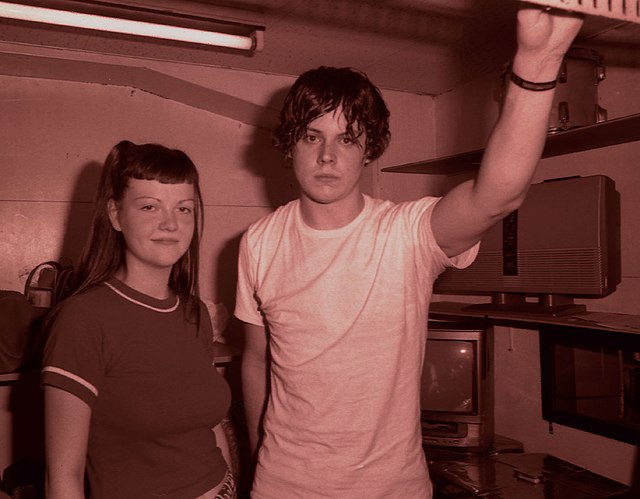
Two young adults stand next to each other. A girl in a red shirt with bangs and a ponytail stands on the left and a boy with a white shirt stands on the right. The picture has a red tint to it.
The White Stripes rock band at a show in Japan (2000)

More recently, another construction of age has been created: “emerging adulthood.” This refers to someone’s in-between stage of youth and adulthood when they start to become independent from their parents, often characterized as mid-late twenties and sometimes beyond. As individuals’ lifespans increase there’s less pressure to get married, buy a house, and make larger commitments like that earlier in their life (Haenfler, 2014). This gives people more flexibility on when they’re considered an “adult” and help explain the new “emerging adulthood.” People are able to continue their subcultural activities further into their life with less scrutiny as well.
~~~

Deviant Career Participation

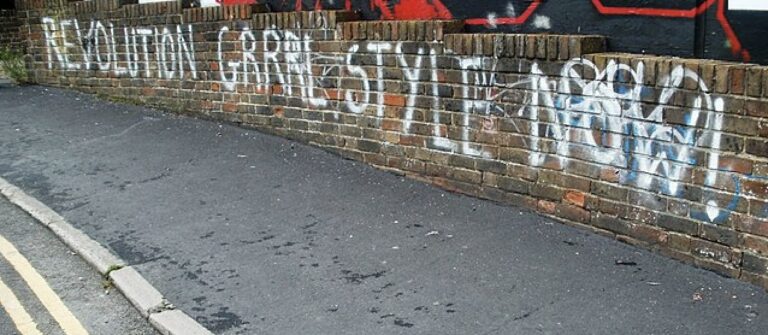
On the side of the road and sidewalk is a brick wall. Spray painted on the wall is "REVOLUTION GRRRL STYLE NOW!"

Stages of Participation

Someone’s subcultural participation involves the moment they starts to interact with a subculture and their values/activities to the time they decide to part ways or become less involved (Haenfler, 2014). Some overarching trends of how people engage with the subculture appear when considering this typical track (Andes, 1998). These stages that Linda Andes identified often correlate to age as well, starting with rebellion as a youth and moving into transcendence as an adult.

Rebellion

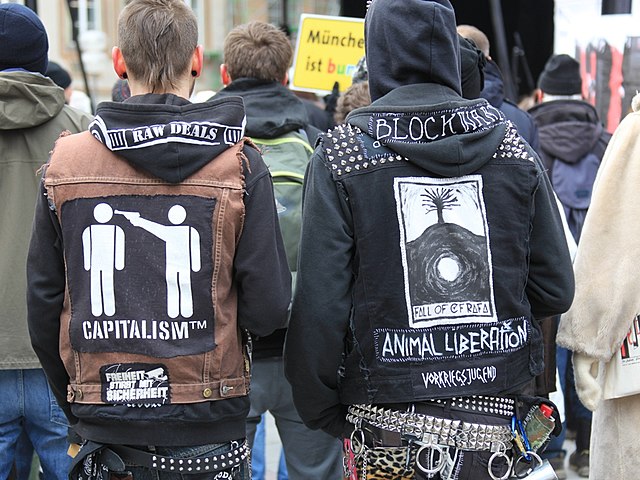
Two people wearing DIY jackets stand with their backs to the camera. The jacket on the left has two stick figures, one raising a gun to the other's head. "Capitalism TM" is printed underneath the figures. The jacket on the right shows text reading "Animal Liberation."
Two people wearing DIY anarchist jackets

An individual begins participating in a subculture with their reference group being “normal” or mainstream people. Their main priority is simply being in opposition to that mainstream group. 
Affiliation

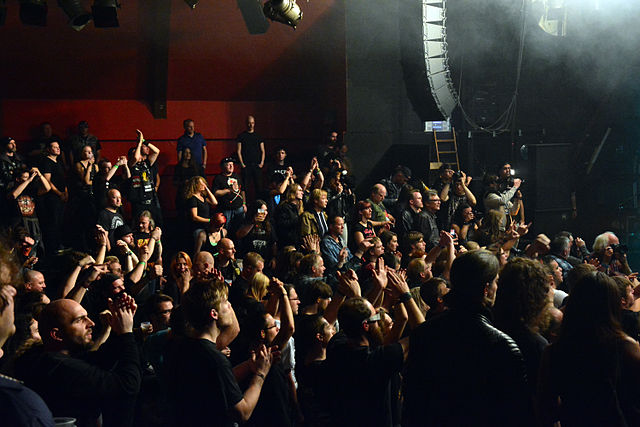
A group of people at a metal concert. Many are dressed in black and have their hands raised above their heads.
Large group at a concert

As they spend more time in the subculture, their reference group shifts to other people within it. Their habits and beliefs start to become more similar to the subculture’s, and they try to fit in by following what other members are doing.
Transcendence

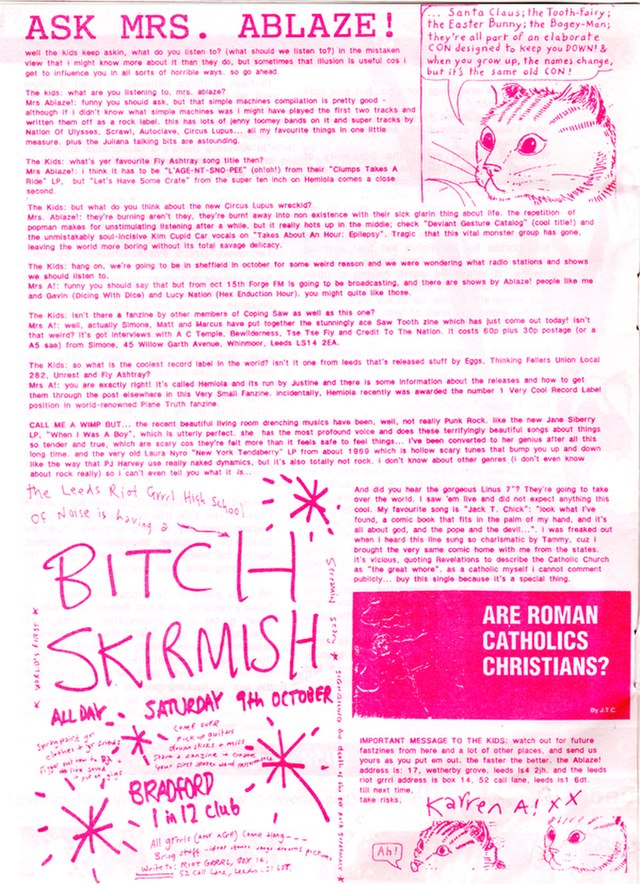
A riot grrrl poster with an advice column written by Mrs. Ablaze, an announcement of a show, and doodles all around.
Riot Grrrls zine

Individuals become more concerned with the ideas and values behind the subculture rather than the performance aspects of it (clothing, hairstyles, merch, etc.) Autonomy takes priority over fitting in with the group.

~~~

Deviant Careers

Cluttered office desk with computers, papers, keyboard, pens, pencils, and a chair by the edge
Normal office set-up

Another way to understand how someone engages with a subculture as they become an adult is through the idea of deviant careers. A deviant career refers to the way in which people involve their subcultural experiences and values into their professional career. The knowledge, style, body, habits, etc. gained from being in a subculture can be detrimental in certain fields. If someone has a lot of tattoos they may be looked down upon in professions dealing with children for example. In some cases though, this subcultural capital can be beneficial and help give someone more credentials. Having a background in DIY (do-it-yourself) work from a punk scene could set someone up well as a contractor who works for themselves (Haenfler, 2014). With this in mind, there are several ways people incorporate their experience into their careers.

Semi-retired Subculturists

Individuals without a direct connection between their subculture and their career. However, some still find a way to incorporate their values and beliefs into their professional work (Haenfler, 2014).

Hybrid Scenesters

People who blend conventional work with their own subcultural passions. This can include graffiti artists who do commissioned work as well as street work (Haenfler, 2014).

Scene Careerists

Professionals in different areas that relate to their subcultural activities. This includes professional musicians, skateboarders, tattoo artists, mechanics, grafitti artists, etc (Haenfler, 2014).

~~~

Navigating Parent & Adulthood

Goth Parents

Goth, punk, and metal subculture participants are thought of as especially young. However, many adults still participate in the group and have even made some shifts to make the subculture more available to older members (Hodkinson, 2012).

4 goth-dressed people stand in front of the camera a hold up rock-on hand signs. They're all dressed in black, with pale makeup on.
Group of goth adults in goth fashion and makeup

The goth scene generally has age restrictions on who can go to events because they are typically held in bars and clubs. This limitation posed challenges for goth parents with children who still wanted to be involved in the activities. To combat this, members started organizing outdoor festivals that took place during the day. These new circumstances were much more kid-friendly, and more parent-friendly as well. With these edits, goth adults are able to balance their role as a parent as well as their subcultural participation (Hodkinson, 2012).

In addition to this, goth parents also taught their children the values of the subculture. These kids were not strangers to goth fashion and music because their parents made it somewhat present in their homes. Some parents mentioned that they hoped growing up in such an environment would make the kids more accepting of different ways of being as they grew up. This extended to a hope of their child choosing to express themselves however they wanted as well (Hodkinson, 2012).

A blog titled “Gothic Charm School” also deals with these issues of aging while maintaining subcultural participation. In their post “Too Old To Be Goth?” the author discusses the mainstream stereotypes of adults and feeling the need to present “more normally” (Lady of the Manners, 1999).
~~~

Skateboarders

Similar to goth subculture, skateboarding is typically a youth-dominated space. The culture surrounding it specifically draws younger members, as well as the physicality the activity requires. If you haven’t gone pro in the sport as an adult, there seems to be little left for you there. So how do adults continue skateboarding despite these social/cultural and physical limitations?

"Skateboarding doesn’t make you a skateboarder. Not being able to stop skateboarding makes you a skateboarder. "

Modification

As the body ages, there are more objective physical limitations it is bounded by, especially in something as impact-heavy as skateboarding. To stay in the sport, older skateboarders may modify tricks to fit their physical capacity better. 

Similarly, older skateboarders tended to zone themselves to safer skating environments (like skate parks) rather than busy streets or cityscapes (Willing, 2019).

Dedication

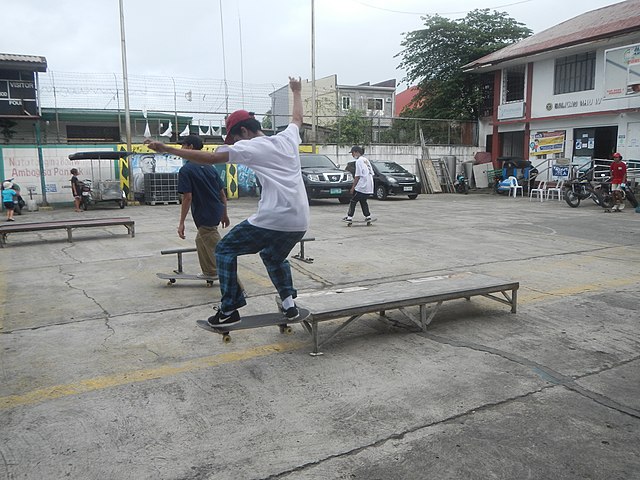
A boy in a white shirt, jeans, and a red baseball cap skates on a rail in a parking lot. There are other people around him casually watching.
Skateboarders in a parking lot

The entire reason these older skaters are still skating is because of their dedication to the activity. Their passion for it maintains their participation beyond what people typically think of as a socially  acceptable age to be skateboarding (Willing, 2019).
Humor

To cope with the changes in their own participation, older skaters make light of the situation with jokes. 

In one of the scenes in the video below, a man remarks after doing tricks on his board, “I think I may have had a heart attack, I think I’m dying right now.” Acknowledging their limitations with humor eases negative thoughts and frustrations about them (Willing, 2019).

Homage

By using homage, older skaters place themselves as respected figures in the subculture, rather than people to be laughed at and dismissed. This helps them maintain their “insider” identity and act as knowledgable elders within the group. 

They demonstrate this subcultural knowledge by doing well-known tricks, knowing good locations to skate, and following cultural conventions (Willing, 2019).

The Tired Video explores older skaters and their relationship with the subculture despite their age.

~~~

Virtual Consensus

Advanced Style Blog

Outside of the conversations held at conventions or more intimate settings, various subcultures have taken this discourse into the virtual realm via blogs. Advanced Style is a vivid example of aging and subculture through an online community. 


Created by Ari Seth Cohen,   Advanced Style spotlights a  subculture of seniors, typically 50 and above, who prioritize expressing themselves through their choice of clothing and accessories, often showcasing distinctive personal styles that challenge traditional expectations regarding attire and appearance for older individuals. They dare themselves and others to subvert and resist stereotypes about older age in relation to beauty standards through their choice wearing bold and unconventional apparel. This blog offers a space for women to revel in their alternative expressions and critiques of mainstream beauty standards through their fashion and self-presentation, regardless of  their age.


This online community has grown tremendously, even leading them to land a documentary honoring their community and its beliefs. If it were not for Cohen’s keen eye and passion to highlight the absence of older people in fashion,  trust that these ladies would have paved the way with their volition and wisdom.


Golden Girls

Cast of Golden Girls, aired in 19885

Golden Girls, first aired in 1985 became one of the most popular shows in the genre of situation comedy. It initially began to serve as a parody of old people, living in the context of Miami, Florida. However, its viewer transformed the series into something significantly meaningful. Although not a subculture itself, the show’s success led to the development of a subculture, particularly that of a fandom. Despite the main characters having differing personalities and backgrounds, they came together under the principle of friendship and togetherness, which are life-guiding principles in their fandoms. 


The series does an excellent job of portraying an intersection between aging and subculture, for the women casted are of an older age and similarly to Advanced Style‘s members, having a distinct fashion style and aesthetic contrary to societal expectations.

~~~

Other Media

The Other F Word

This film examines punk rockers and their shift into fatherhood after having kids. It dives into the challenges of balancing these two identities and the joy they get from both.

~~~

Anvil: The Story of Anvil

This trailer introduces you to the movie centered around Anvil: a heavy metal band. The band tries to hang onto their relevance despite their age. Their passion for music helps them push through everything working against them.

~~~

Further Reading

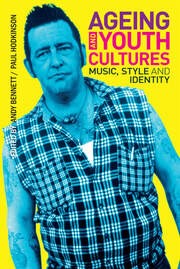
Cover of "Ageing and Youth Culture: Music, Style and Identity." A man in a plaid tank top with a necklace is tinted blue and stands in front of a yellow background.

Ageing and Youth Cultures Music, Style, and Identity

This book dives into the intersection of age as it relates to music, style, and identity. It explores how these change as an individual ages and what sorts of tensions it brings up specifically focused on members of punk, rave, mod, skateboarding subcultures.


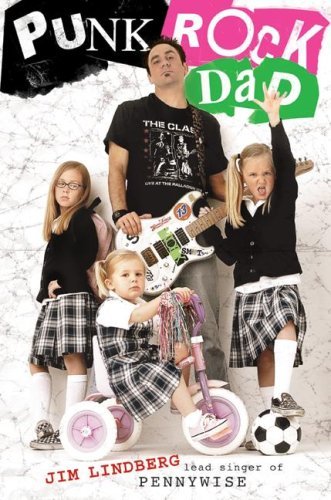
Book cover of Punk Rock Dad with a dad in a black tshirt holding an electric guitar standing behind three young girls in school uniforms.

Punk Rock Dad

This book is written by and about Jim, former lead singer of Pennywise and a father. He details his methods of parenting while maintaining parts of his subculture. He balances the normal responsibilities of a parent and adult with aspects of the punk rock culture.

When Gamers Become Parents, Finding Balance is Next Level

This New York Times article chats with several professional gamers on how they manage to keep up with their lifestyle while also having a child to take care of. This is especially difficult when things like video games are heavily discouraged for the health of a child because of screen time concerns.

Skateboarding Moms

This blog post collects information from five different moms who all skateboard. Each one talks about the tricks they do, how they find time to go out and skate, and how they deal with stigma surrounding their age or subculture.

~~~

References

Andes, L. (1998). “Growing Up Punk: Meaning and Commitment Careers in Contemporary Youth Subculture.” In J.S. Epstein (ed.) Youth Culture: Identity in a Postmodern World. Malden, MA: Blackwell Publishers, pp. 212-231. https://www.wiley.com/en-us/Youth+Culture%3A+Identity+in+a+Postmodern+World-p-9781557868510


Hodkinson, P., & Bennett, A. (2013). Ageing and youth cultures: Music, style and identity. Bloomsbury Publishing. https://www.routledge.com/Ageing-and-Youth-Cultures-Music-Style-and-Identity/Bennett-Hodkinson/p/book/9781847888358

Goffman, Erving. (1963). Stigma: Notes on the Management of Spoiled Identity. New York:
Simon & Schuster. https://www.goodreads.com/book/show/931986.Stigma 

Haenfler, R. (2014). Subcultures. Routledge. https://www.routledge.com/Subcultures-The-Basics/Haenfler/p/book/9781032132778

Hodkinson, P. (2013). Family and Parenthood in an Ageing “Youth” Culture: A Collective Embrace of Dominant Adulthood? Sociology, 47(6), 1072–1087. http://www.jstor.org/stable/24433686
Lady of the Manners. (May 1999). Too Old To Be Goth? Gothic Charm School. https://gothic-charm-school.com/charm/?p=37
Willing, I., Bennett, A., Piispa, M., & Green, B. (2019). Skateboarding and the ‘Tired Generation’: Ageing in Youth Cultures and Lifestyle Sports. Sociology, 53(3), 503–518. https://www.jstor.org/stable/26972279 

~~~

Page Citation

Shermak, K. 2024. “Aging and Subcultures.” Subcultures and Sociology. Retrieved [date viewed]. (https://haenfler.sites.grinnell.edu/aging-subcultures/)

The views and opinions expressed on individual web pages are strictly those of their authors and are not official statements of Grinnell College. Copyright Statement.