Dungeons and Dragons (D&D) is an immersive fantasy role-playing game that allows players to embark on epic journeys with other players through completely new and unique environments. The game is composed of multiple character classes, races, abilities, and backstories combined by the players and written down on their character sheets, creating their in-game player. Then, a player known as the Dungeon Master (DM) places all the characters into a world of their creation and guides the players through the world and story they made as they learn how their decisions impact the world. Quite similar to a video game, players get to interact with the world however they choose. The players can typically choose to do whatever they want, but all their decisions are accompanied by rolls of different dice combined with skill scores that determine the success of the determined action. For example, a player may ask the DM to perform a rock rendition of “Country Roads” to distract the enemy and then roll to see how their performance goes and roll a 1. The DM would then decide on why and how your performance went awry and the potential consequences of this failure. A typical D&D campaign can range from weeks to months to many years of playtime, as players further expand their world, characters, and relationships. This immersive experience, which combines elements of storytelling, strategy, and improvisation, has drawn millions of unique people worldwide to explore the realms within the game and build lifelong relationships, all thanks to D&D. But was it always like this?
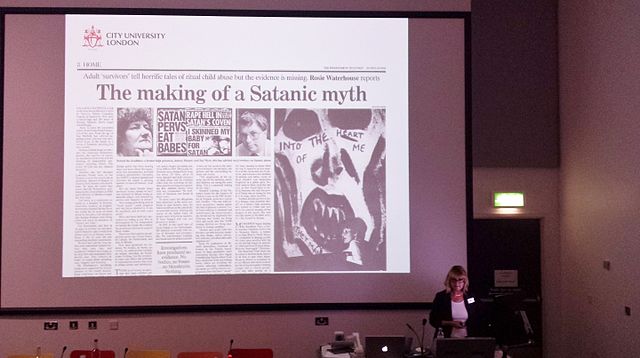
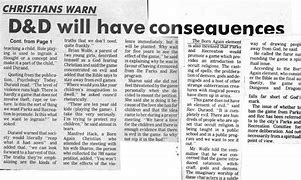
The first edition of D&D, created in 1974 by Gary Gygax and Dave Arneson, marked the inception of a revolutionary gaming phenomenon that would become a pioneer in the world of role-playing games (RPGs). Over the years, D&D has undergone several iterations, evolving through five editions and inspiring hundreds of spinoff games, amassing a dedicated following of millions of fans worldwide. Eventually, the game found its home under the ownership and licensing of Wizards of the Coast, where it continues to thrive today. However, during the 1970s and 1980s, D&D faced a significant challenge as it became the subject of intense scrutiny and controversy. This period was marked by what became known as the ‘satanic panic,’ fueled by sensationalist media reports and moral hysteria. The panic was exacerbated by events such as the mysterious disappearance of James Dallas Egbert III, a college student who had reportedly been involved in D&D (Martin et al. 2017). Authorities and media outlets linked Egbert’s disappearance to his involvement with the game, portraying D&D as a dangerous gateway to occult practices and demonic influence (Fine 2002). The tragic death of Egbert further fueled public fears, leading to widespread concern among parents that their children were being lured into a sinister world of satanism and the occult through the game. As a result, D&D acquired a subversive and controversial image, with many viewing it as a threat to moral values and the safety of youth. Despite subsequent investigations revealing no direct connection between D&D and Egbert’s disappearance, the damage to the game’s reputation had been done (Fine 2002). It took years for D&D to shake off the stigma associated with the satanic panic and regain mainstream acceptance (Laycock 2015).
At D&D’s conception, it immediately attracted people who are heavily invested in creating and experiencing a fantasy world. This led to the image of basement and game store nerds that is so heavily portrayed in the media nowadays (Ewalt 2013). After the satanic panic swept the nation, D&D was reserved for those who were willing to go against the grain despite the rumors of satanism and the nerd title being cast against them. However, it is unfair to draw a generalizable category over all D&D players, since, as we know, it can be played by all types of people in all sorts of places (Ewalt 2013). However, many people believe that the style of backroom D&D is fading away because of its recent commercial success. Despite being initially commercially successful, many subculturists saw it as a unique experience to them rather than as a global phenomenon. After being purchased by Wizards of the Coast, D&D quickly became a household game, as they quickly formed a monopoly of fantasy worlds and stories under fair use laws. This monopoly essentially swept away the original acts of subversion by playing D&D as now the game was being made and updated to be sold as a product, rather than being sold as an experience as it once was. With much of D&D locked behind a paywall and legal barrier, it was hard for the “original” D&D players to accept these new commercialized products, with many of them still playing older, and more ‘authentic’ editions of the game. This level of authenticity is highly subjective given that levels of authenticity are only decided by those who choose to partake in the game.
Critical Role Fans sing the theme song in a sold out Wembley StadiumUser: Nico Neilsen
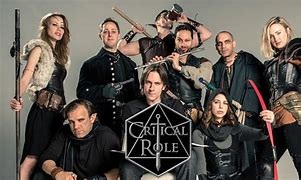
Also, successful twitch campaigns like Critical Role have transformed the subcultural aspects of D&D into a worldwide phenomenon. Critical Role is comprised of multiple incredibly successful voice actors playing D&D, who quickly gained a cult-like following, selling out huge stadiums (such as Wembley stadium) full of fans watching a life performance of a 4-hour campaign episode. With these kinds of events the underground nature of D&D is evolving into a mainstream event rather than a unique experience that was shared between a select few in the know (Ewalt 2013).
Even big Hollywood names like vin diesel credit D&D as a transformative experience in his life, that led him to the current levels of commercial success he sees. So is this loss of authenticity of a bad thing for D&D as a game? The short answer, No. I believe that the mainstreaming of D&D actually allows for more people to explore their creativity and experience the game, leaving their own marks on the game for future iterations to explore.
D&D session with famous actor Vin Diesel User: Geek & Sundry
"No. I never play D&D. For some reason, they thought that I played D&D for 20 years. They thought that I spent years playing Barbarians, Witchunters, The Arcanum. They thought I played D&D back in the '70s when it's just the basic D&D set. They thought I continued to play D&D when it became Advanced Dungeons and Dragons. They thought I played D&D when there were only three books - the "Player's Handbook," the "Monster's Manual" and the "Dungeon Master's Guide." They thought I played D&D as it continued onto the Unearthed Arcanum, Oriental Adventures, Sea Adventures, Wilderness Adventures. THEY thought I played D&D at the time when "Deities and Demigods" was the brand-new book. THEY thought I played D&D when I used to get up to a place called The Complete Strategist in New York. [Mouths: "I'm into D&D a lot."]" -Vin Diesel
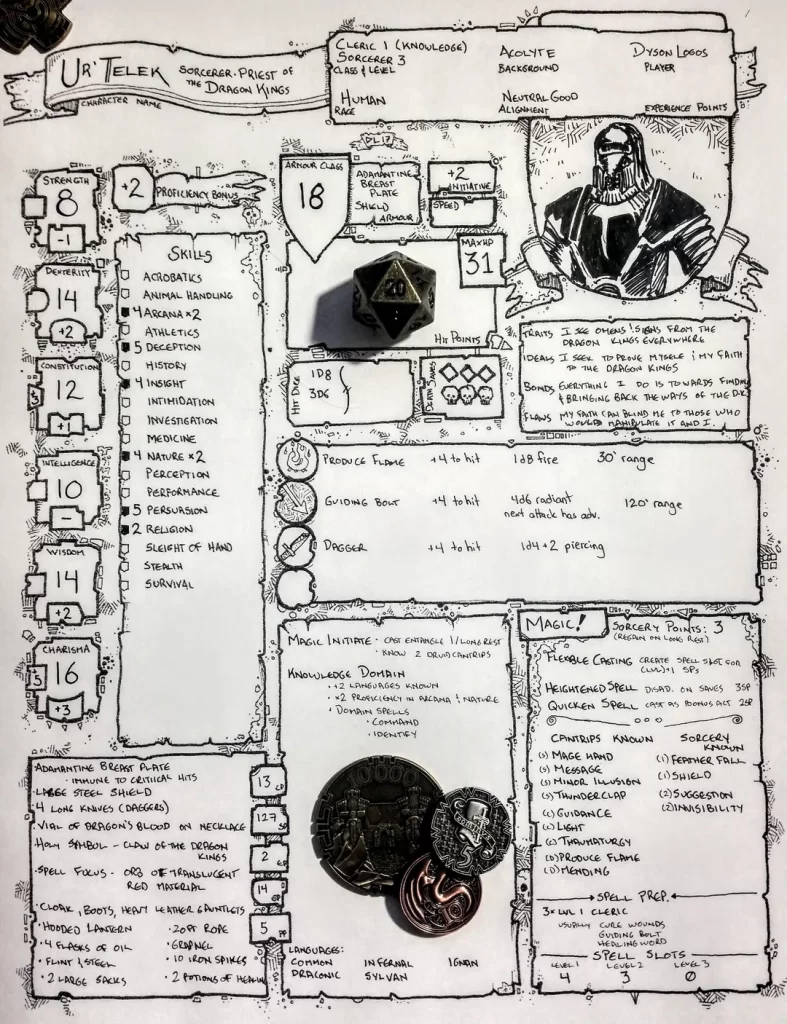
Depicted is a hand-drawn, well-loved character sheet poster by Reddit User Dysonlogos
The reason the authentic D&D experience is not in danger is because of the game’s innate ability for players to orient their characters within the world and its story. Each player gets to construct their own unique identity; therefore, there is no one correct or more authentic way, only how each specific character chooses to interact and leave their impact on the world. D&D can resist stigma by allowing players to experiment with any sort of races, genders, and lived experiences (Fine 2002) Not only does this boost each player’s creativity, but it also allows players to solidify their own identities or question things about themselves that may not be typically accepted in the outside world. A male-identifying player could play a trans character and learn not only more about their own identity but also begin to experience the struggles and uniqueness of the trans experience. The same can be said for any matter of features about a character—black/white, rich/poor, male/female, religious/atheist (Laycock 2015); any experience is accepted and welcomed. By breaking down the notions of being forced into a role one’s whole life, a lot of introspection can be gained. (Garcia 2017)
On top of the micro view, the ability to create allows us to explore the rules and laws of our world, as often the structures we see in the D&D world tend to greatly parallel the existing structures in our own world. A great DM can realize this and build parts of their world that subvert expectations and break out of the structure. As a viewing tool, D&D allows us to see how racial hegemonies form, or how and why actions have unexpected consequences, or even how social interactions can be perceived (Gomez et al. 2023). This macro view allows D&D to become a quasi-simulation tool. As we form our own questions about the characters in our party, the structure of the game allows players to troubleshoot social encounters and environments with no sense of real repercussions or failure (Lorenz et al. 2022).
The powers of the imagination of D&D have been harnessed recently in many ways to aid people in their real life. In a therapeutic setting, it has been used to allow players to confront their own issues and build characters that break past ailments the player may be struggling with, such as physical disability or mental/social disabilities (Gomez et al. 2023). Lastly, D&D has been used post-COVID by schools to retrain students how to think creatively and engage with social skills that fell to the wayside during the pandemic. Due to these reasons, increasing awareness and support for D&D could be very impactful on the lives of many people worldwide (Lorenz et al. 2022).
User: Psychology in Seattle
TV Series:
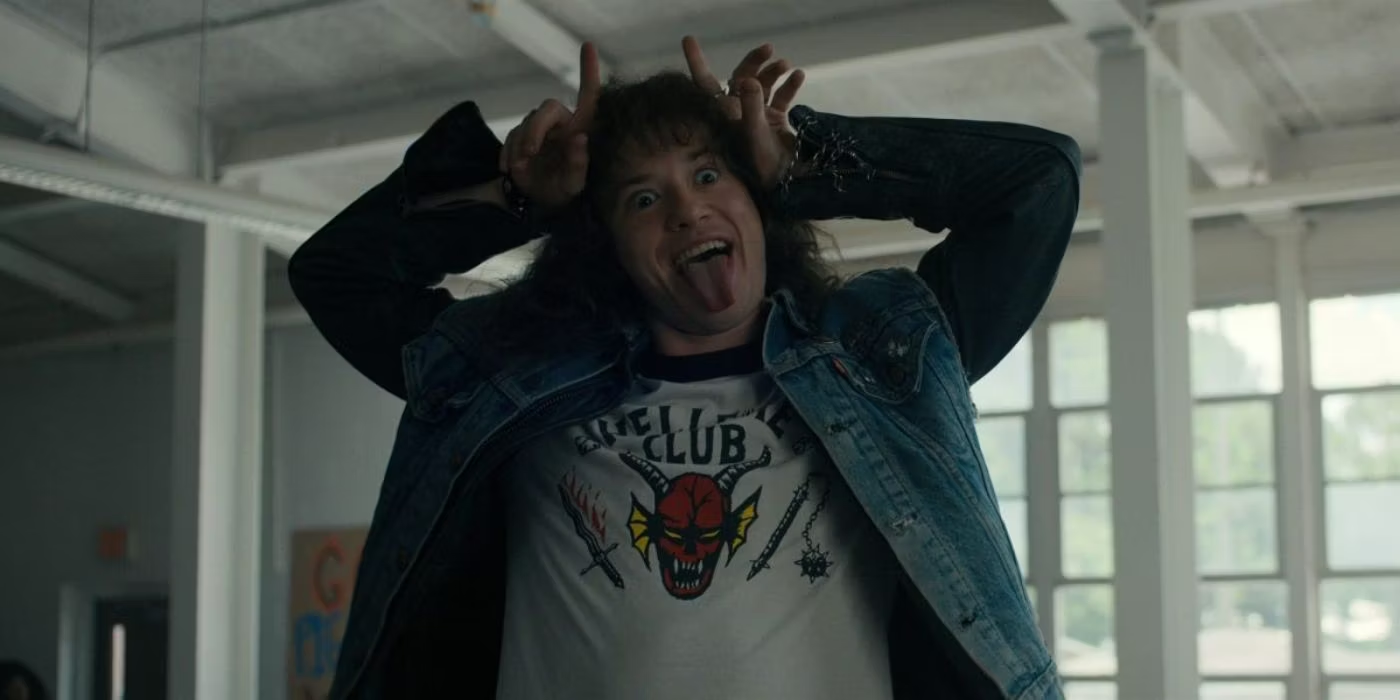
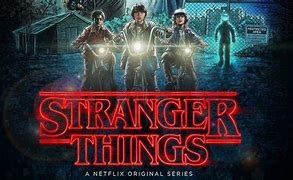
Stranger Things: A Netflix original show about children whose D&D campaign becomes their reality in Hawkins, Indiana. (Image 8)
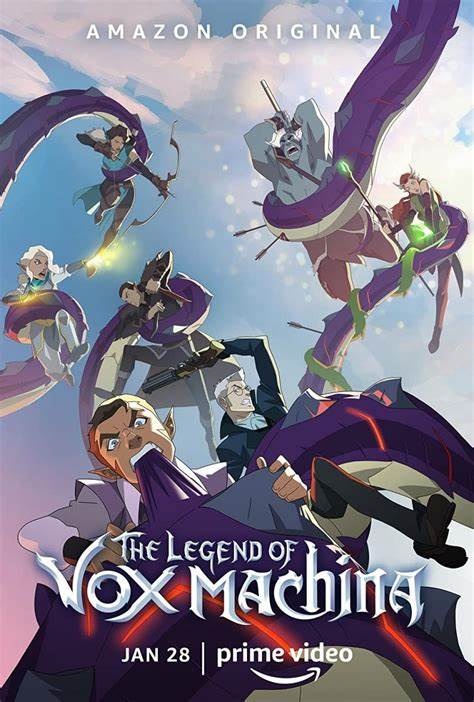
Vox Machina: An Amazon Prime animated series based on the 1st season of Critical role. This follows the groups of adventures known as Vox Machina as they battle occultists, and dragons. (Image 9)
Movies:
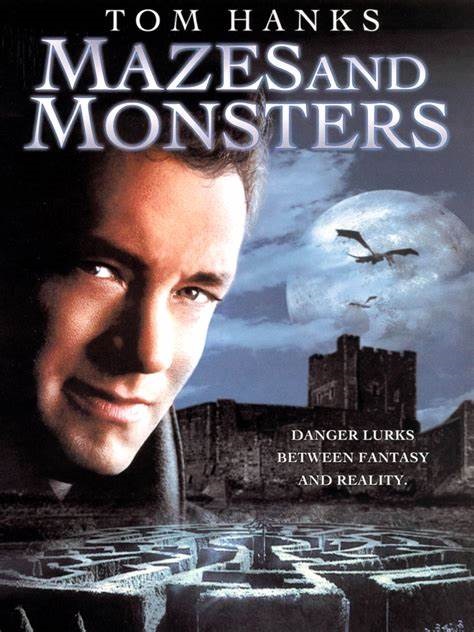
Mazes and Monsters: A made for TV movie starring a young Tom Hanks, loosely following the true story of James Dallas Egbert III, and his D&D related disapearance. (Image 6)
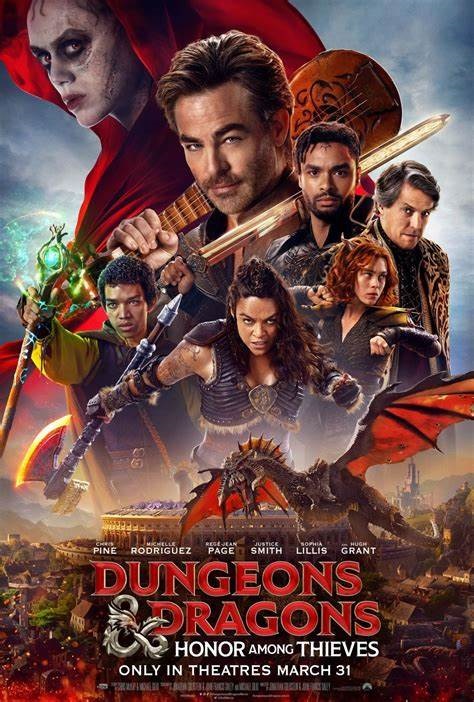
Dungeons & Dragons (2023): A modern take on D&D following a group of thieves and their adventures through the Forgotten Realms. (Image 5)
Podcasts:
Critical Role: The most commercially sucessful D&D podcast comprised of multiple incredebly sucessful voice actors, with millions of weekly listeners. They are currently on their third campaign and party known as Hells Bells (Prior Parties are Vox Machina and Mighty Nein). (Image 2)
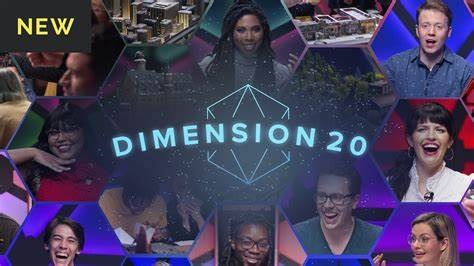
Dimension 20: A D&D podcast most famous for its series fantasy high, but has done many different D&D adventures throughout the years. (Image 3)
Stinky Dragon: A comedy-based D&D podcast on their second campaign, following the thread of a murder mystery. (Image 7)
Dungeons & Daddies: Dungeons & Daddies is a D&D podcast that leans fully into the humor of its characters and strays away from the traditional D&D mechanics. Currently on its second campaign of dads plucked from the real world and dropped into the forgotten realms. (Image 4)
Video/Board Games:
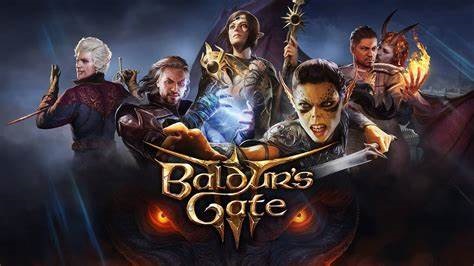
Baldurs Gate (All): Baldur’s Gate is a series of oficially licensed D&D video games that follow very closely to the mechanics of D&D and follow a very customizable and unique array of mechanics. (Image 1)
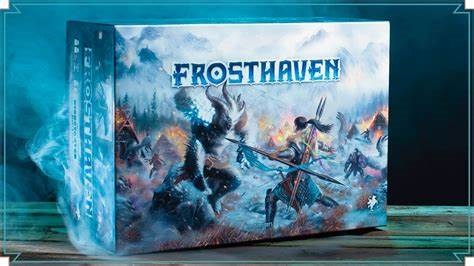
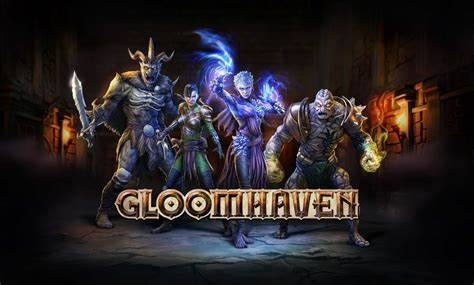
Gloom/Frost Haven: The ‘haven’ games are co-op boardgames that follow preset narrative’s and plays very similar to a tabletop style D&D boardgame. (Images 11&12)
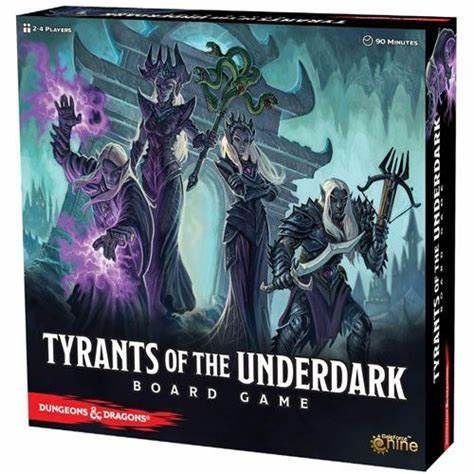
Tyrants of the Underdark: Tyrant’s is a game focused on Drow Elves building their evil empires in order to conquer all the other players, and become the rulers of the Underdark and hopefully the whole universe. (Image 10)
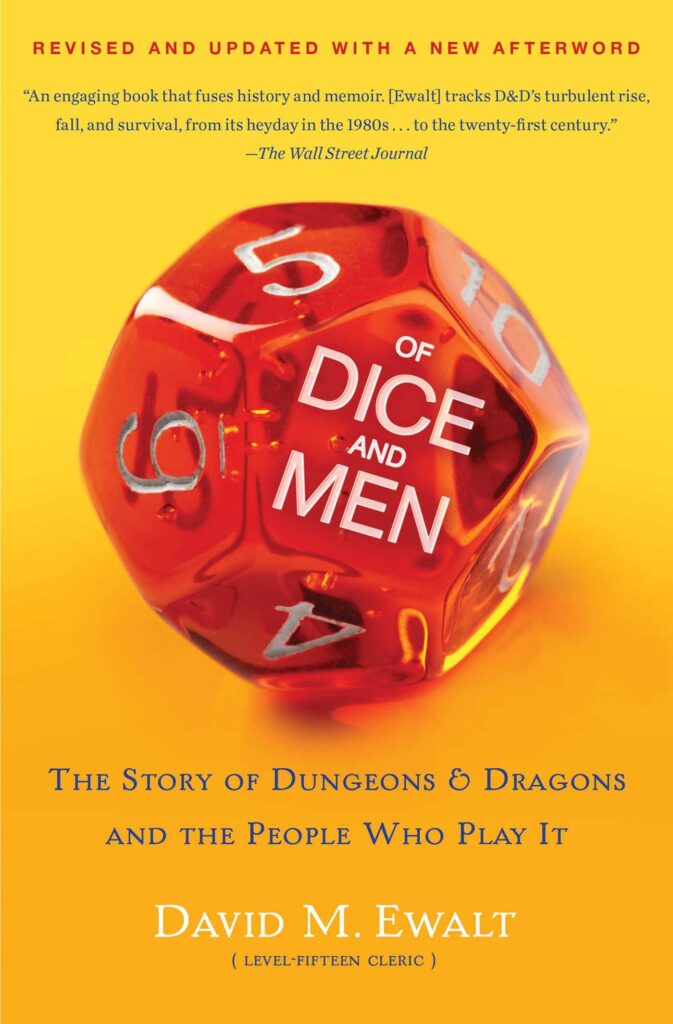
Ewalt describes the story of his personal D&D campaign and the members of his parties and their adventure. Whilst juxtaposing their characters with their real-life personalities to break stigma about the nature of the people who play Dungeons and Dragons.
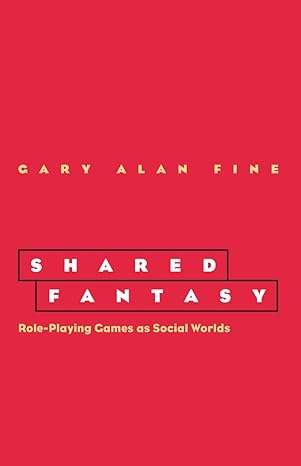
In this crucial piece of D&D history sociologist Fine delves into the social worlds D&D and other Role-Playing Games creates, whilst also analyzing the exterior stigma associated with the game. He spends a lot of time discussing the death of James Dallas Egbert III, and the moral panic surrounding it.
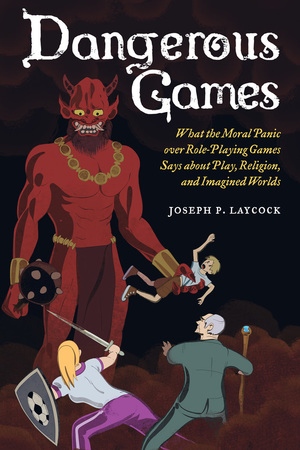
Laycock uses the societal reactions to D&D as an analagous case to the public apprehensiveness and responses towards religion, as he evaluates the response to people creating their own unique experiences.
Page Citation: Smith, Connor. 2024. “Dungeons and Dragons (D&D)” Subcultures and Sociology Date retrieved https://haenfler.sites.grinnell.edu/dungeons-and-dragons-dd/