
Online spaces create arenas for interaction, community building, and deviance which previously did not exist. Many subcultural activities have traditionally centered in physical spaces like clubs, concerts, or conventions. In these spaces, shared style, music, subversive activities, or deviant worldviews often acted as unifying factors (Evans 1997; Cherry and Mellins 2011; Haenfler 2013). However, with the advent of the internet, some or all of subcultural interaction have moved online, to platforms like YouTube, Instagram, or 4chan (Haenfler, 2013). These sites allow for the rapid spread of ideas, images, sounds, and connections across the world, fostering the creation of global communities.
With the growth of information and communication technologies like the Internet, individuals have more opportunities to engage with certain subcultures. For example, members of the straight-edge subculture have used music and the internet to identify and advocate for themselves. Using the concepts of authenticity and scene, participants in a straightedge internet forum manage their subcultural affiliations and challenge others’ claims of this identity, highlighting the internet as a new but contested subcultural arena (Williams 2006). Similarly, Bliss Foster explores whether the rapid development of the internet has indeed eradicated all subcultures, proposing the question: Is subculture dead? In this video, he identifies three major shifts in subcultures due to the internet: 1) The internet allows individuals to participate in subcultures remotely, making physical presence optional rather than mandatory. This reduces costs and allows people to connect with one or multiple subculture communities using just their phones. 2) The internet fosters a certain uniformity/sameness, where, for example, clubs increasingly share similar vibes and have access to similar playlists worldwide. 3) Contemporary subcultures are often just reiterations of previous ones. People from diverse cultural backgrounds add new blood and improve the traditional subcultures. In the end, Foster asserts that there is no definitive answer to whether subculture is dead; it has simply evolved into a “different” concept due to social changes. His video offers a compelling perspective on how the internet has transformed the manifestation of subcultures and how its accessibility has altered people’s views on the concept of subculture in digital space.
In recent years, many subcultures have originated online or adapted to include online spaces (e.g. Kidder 2012). This movement into virtual realms has had various impacts, both allowing for increased inclusion in subcultures and increased opportunity for anonymous hostility. By better understanding the opportunities and drawbacks created by digital spaces, we might learn how subcultures are evolving to change both the virtual and real world.
As digital media has evolved, providing constant access to entertainment, communication, and community through the internet, some subcultural spaces have shifted predominantly online and are now more accessible than ever. Social media platforms like Facebook, Twitter, Instagram, Reddit, MySpace, Snapchat, YouTube, WhatsApp, Pandora, Pinterest, Tumblr, TikTok, and others have opened up new avenues for subculture enthusiasts to connect and engage with one another (Haenfler, 2013). One potential avenue is augmented reality (AR) metaverse technology. In this video, Sutu, an AR designer, explains how AR metaverse technology sparks incredible creativity and encourages people to participate in building the metaverse. This technology goes beyond digital spaces; it can transform and enrich our experience of the material world and unite communities through digital art that intersects with physical space. From this video, one can envision how digital art might become a mainstream trend in the future, shaping and impacting subcultural displays, as the most common and straightforward expressions of subculture often emerge through prevalent aesthetic arts and music.
Nevertheless, as social media popularity has increased, certain platforms are now referred to as “sites of commodification, places where the spirit of access, interactivity, and participation is harnessed and capitalized on, creating surplus value for corporations” (Vear 2020). An example of this is social media influencers. Social media influencers often collaborate with brands, create sponsored content, and engage with followers through storytelling and personal branding. Although commodification may be one goal of social media influencers, influencers also interact with their fans more than celebrities generally do, creating a sense of community with their followers and engaging in self-commodification (Kizziah 2021).
Virtual spaces allow for the construction of virtual identities, which can simultaneously intertwine and diverge from a person’s non-virtual identity (Dupont 2019). The sense of anonymity that participation in digital subcultures provides may allow some participants to express themselves more fully without fear of negative consequences associated with expressing these feelings in offline spaces (Bortree 2005).
Cadari Subculture
The Cadari subculture is one example of this increased opportunity for self expression in digital realms. Cadari (face-veiled women in Indonesia) create and maintain their subculture through the internet. The internet not only provides them with an opportunity to distance themselves from mainstream civil society but also enables them to cultivate a subculture that contrasts with the predominant Islamic lifestyles of most Indonesians. This case illustrates how the internet and digital platforms empower cadari to express and advocate for themselves freely, without fear of negative repercussions.
The widespread, rapid access to subcultural media provided by the internet has made it easier for people to discover, share, and contribute to subcultures that may have otherwise remained isolated or inaccessible (Guerra 2020). In this way, the existence of digital subcultures in a space less tethered to time and space allows for people to access subcultural spaces who might otherwise have been excluded.
Gaming Subculture
Gamers also leverage digital media to transform their hobbies into careers. In 2019, Tyler “Ninja” Blevins, a Fortnite streamer, was recognized by Time Magazine as one of the most influential individuals, and labeled as a “pioneer” who significantly contributed to the legitimacy of e-sports (Smith-Schuster 2019). Games like League of Legends, Call of Duty, Minecraft, Skyrim, Grand Theft Auto V, Pokemon Legends, and Valorant offer career opportunities, where gamers can stream on platforms like Twitch. For example, the YouTuber “Dream,” known for Minecraft content, gained over 30 million subscribers, with some videos reaching over 70 million views. Dream’s innovative use of Minecraft, such as speedrunning while being pursued by other players, has sparked fanfiction, fan art, and a subculture where fans create characters and stories and purchase Dream merchandise (Haenfler 2013).
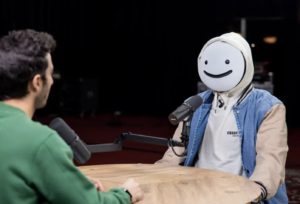
"It’s not necessarily that anyone could be Dream. But anyone could be like Dream, anyone could do what I did. I went to 30 million subscribers on YouTube, I started with a crappy laptop and I didn’t show my face,” Dream said. “It's just proof that, believe in yourself, you don’t have to care about what other people think …"
-Dream Tweet
Online Fandoms
Fan communities dedicated to specific franchises, celebrities, musicians, movies, TV shows, anime, manga, and books form diverse subcultures. These communities create fan art, fan fiction, fan theories, cosplay, and organize conventions and events (e.g., Bronies, Potterheads, K-pop). For example, fans of the South Korean pop group BTS, so-called members of the BTS ARMY, will frequently donate to charity (they have donated to 630 charities worldwide over the years). Many of the ARMY’s preferred charities support LGBTQ+ youth. ARMY uses social media platforms such as Twitter and Instagram to communicate online. However, stans have also perpetuated the worst of cancel culture and troll culture. They have made systemic issues into personal ones, attempted to solve complex problems by bullying individuals off Twitter, and tried to ruin people’s lives. They have shouted down anyone who has tried to attack their idols, spread rumors and created toxicity online (Tong, 2022).
Online Parkour
Subculture enthusiasts straddle both virtual and physical realms, showcasing that the distinction between real and virtual is more of a dynamic interplay, resulting in something at their intersection. For instance, practitioners of parkour often discover this discipline online, drawing inspiration from videos shared by others across the globe (Kidder 2012). They then emulate these stunts and movements performed in distant locations within their own local environments. Over time, some traceurs document and share their own achievements online, engaging in discussions and exchanging stories and ideas with fellow enthusiasts. This illustrates how the virtual becomes integrated into the physical, where “these tangible, physical actions embody distant, fleeting worlds experienced through screens” (Kidder 2012:247–248). Numerous opportunities exist for the convergence of the virtual and the embodied. For example, aspiring metal vocalists can learn proper screaming or growling techniques from YouTube tutorials, much like how skaters, graffiti artists, gamers, and cosplayers acquire new skills and methods online.
Lastly, extensive use of the internet provides opportunities for marginalized subcultures to be seen and recognized by the wider world, allowing them to create a greater impact on mainstream view points.
A perceived sense of anonymity provided by the internet can also create spaces where individuals may feel more free to share harmful beliefs or ideas. With the help of algorithms based on obtaining more views and keeping individuals engaged, users can quickly immerse themselves in an echo chamber of radical, extremist ideas (e.g. Papadamou et al. 2021). Because of the limited government and organizational regulation, much of this hateful activity continues unhindered (Haenfler 2013). Although the structure of the internet allows for speed of communication and anonymity not as easily achieved in the non-digital world, the internet itself does not cause hateful activities to originate. Rather, cultural norms which reflect sexism, racism, ableism, and other forms of discrimination act as the main drivers of these actions. Thus, although digital subcultures allow for the increased opportunity for engagement, expansion, and enjoyment, digital spaces also provide opportunities for (but do not cause) the growth of hate-based subcultures that pose a risk to the well-being of our global society.
Some examples of subcultures and people that have leveraged the described structure of the internet in harmful ways include the following:
Pedophile subculture
The formation and operation of a pedophile subculture online is defined by four normative orders: marginalization, sexuality, law, and security. These norms shape pedophile identities and subcultural boundaries while fostering a dark web where members can share and validate their deviant beliefs and behaviors away from mainstream societal scrutiny (Holt 2010). The article highlights the inadequacies in internet regulation that pose risks to global societal well-being. While the internet provides access and a platform for the emerging subcultures, it also facilitates unlawful activities. As we embrace the benefits of digital technology, we must raise our awareness about its potential dangers.
Gamergate
Gamergate, also known as GamerGate (GG), emerged as a loosely structured online campaign characterized by misogynistic harassment and a conservative opposition to feminist ideals, diversity, and progressivism within the realm of video game culture. Operating predominantly through the hashtag “#Gamergate” during the years 2014 and 2015, its focus was on targeting prominent women in the video game industry, notably feminist media critic Anita Sarkeesian, and video game developers Zoë Quinn and Brianna Wu (Romano, 2021).


Bortree, Denise Sevick. 2005. “Presentation of Self on the Web: An Ethnographic Study of Teenage Girls’ Weblogs.” Education, Communication & Information 5, no. 1: 25–39. doi:10.1080/14636310500061102.
Cherry, Brigid, and Maria Mellins. 2011. “Negotiating the punk in steampunk: subculture, fashion & performative identity.” Punk & Post Punk 1, no. 1: 5-25.
Dupont, Tyler. 2020. “Authentic Subcultural Identities and Social Media: American Skateboarders and Instagram.” Deviant Behavior 41, no. 5: 649–64. doi:10.1080/01639625.2019.1585413.
Evans, Caroline. 1997. “Street style, subculture and subversion.” Costume 31, no. 1: 105-110.
Foster, Bliss. “Is Subculture Dead?” YouTube, 9 May 2022, www.youtube.com/watch?v=C5ye2qRHCyw.
Guerra, Paula. 2020. Under-Connected: Youth Subcultures, Resistance and Sociability in the Internet Age. In: Gildart, K., et al. Hebdige and Subculture in the Twenty-First Century. Palgrave Studies in the History of Subcultures and Popular Music. Palgrave Macmillan, Cham. https://doi.org/10.1007/978-3-030-28475-6_10
Haciyakupoglu, Gulizar, and Yasmine Wong, editors. Gender and Security in Digital Space : Navigating Access, Harassment, and Disinformation. Routledge, Taylor & Francis Group, 2023, https://doi.org/10.4324/9781003261605.
Holt, Thomas J., et al. “Considering the Pedophile Subculture Online.” Sexual Abuse, vol. 22, 10.1, 2010, pp. 3–24, 10. https://doi.org/10.1177/1079063209344979.
Hoskins, Kate, Carlo Genova, and Nic Crowe. 2022. (Eds.).Digital Youth Subcultures: Performing ‘Transgressive’ Identities in Digital Social Spaces (1st ed.). Routledge. https://doi.org/10.4324/9781003129684
Kidder, Jeffrey. L. 2012. “Parkour, The Affective Appropriation of Urban Space, and the Real/Virtual Dialectic.” City & Community 11 (3).
Kizziah, Lane. 2021. “Selling or Sold: Influencers and the Commodification of Social Media.” The Michigan Daily. Retrieved April 21, 2024. https://www.michigandaily.com/statement/selling-or-sold-influencers-and-the-commodification-of-social-media/.
McArthur, J. 2008. Digital subculture. Journal of Communication Inquiry, 33(1), 58–70. https://doi.org/10.1177/0196859908325676
Nisa, Eva. F. 2013. The internet subculture of Indonesian face-veiled women. International
Journal of Cultural Studies, 16(3), 241-255. https://doi.org/10.1177/1367877912474534
O’Donnell, Jessica. 2022. Gamergate and Anti-Feminism in the Digital Age.
Papadamou, Konstantinos, Savvas Zannettou, Jeremy Blackburn, Emiliano De Cristofaro,
Gianluca Stringhini, and Michael Sirivianos. 2021. “‘How Over is it?’ Understanding the
Incel Community on YouTube.” Proceedings of the ACM on Human-Com puter
Interaction 5 (CSCW2, Article 412).
Phillips, Whitney. 2024. “Internet Troll Sub-Culture’s Savage Spoofing of Mainstream Media [Excerpt].” Scientific American. https://www.scientificamerican.com/article/internet-troll-sub-culture-s-savage-spoofing-of-mainstream-media-excerpt/
Romano, Aja. “What We Still Haven’t Learned from Gamergate.” Vox, 20 Jan. 2020, www.vox.com/culture/2020/1/20/20808875/gamergate-lessons-cultural-impact-changes-harassment-laws.
Smith-Schuster, Juju. 2019. “Ninja.” TIME Magazine. https://time.com/collection/100-most-influential-people-2019/5567713/ninja .
Sutu. “Everyone Can Participate in Building the Metaverse.” Sutu: Everyone Can Participate in Building the Metaverse | TED Talk, Apr. 2022, www.ted.com/talks/sutu_everyone_can_participate_in_building_the_metaverse?utm_campaign=tedspread&utm_medium=referral&utm_source=tedcomshare.
Tong, Lance. “Diving into Stan Culture.” El Estoque, elestoque.org/2022/04/27/entertainment/diving-into-stan-culture/. Retrieved May 1, 2024.
Vlavo, Fidèle A. Performing Digital Activism: New Aesthetics and Discourses of Resistance. 1st ed., vol. 37, Routledge, 2017, https://doi.org/10.4324/9781315692869.
Vear, Aysha M. 2020. “The Influencer Experience: Identity Performance, Commodification, and Agency in YouTube Influencers.” Electronic Theses and Dissertations. Retrieved April 21, 2024 https://digitalcommons.library.umaine.edu/etd/3294.
Williams, J. Patrick. 2006. Authentic Identities: Straightedge Subculture, Music, and the Internet.
Journal of Contemporary Ethnography, 35(2), 173-200. https://doi.org/10.1177/0891241605285100
Whiterice13. 2014. “Subculture – the Art of Trolling.” TheWoodenSnail. Retrieved April 21, 2024. https://thewoodensnail.wordpress.com/2014/03/18/subculture-trolling/.
Suggested Page Citation
Sara Garcia, Rui Lin, and Toni Duan. 2024. “Digital Subcultures Theory.” Subcultures and Sociology. https://haenfler.sites.grinnell.edu/digital-subcultures-theory/