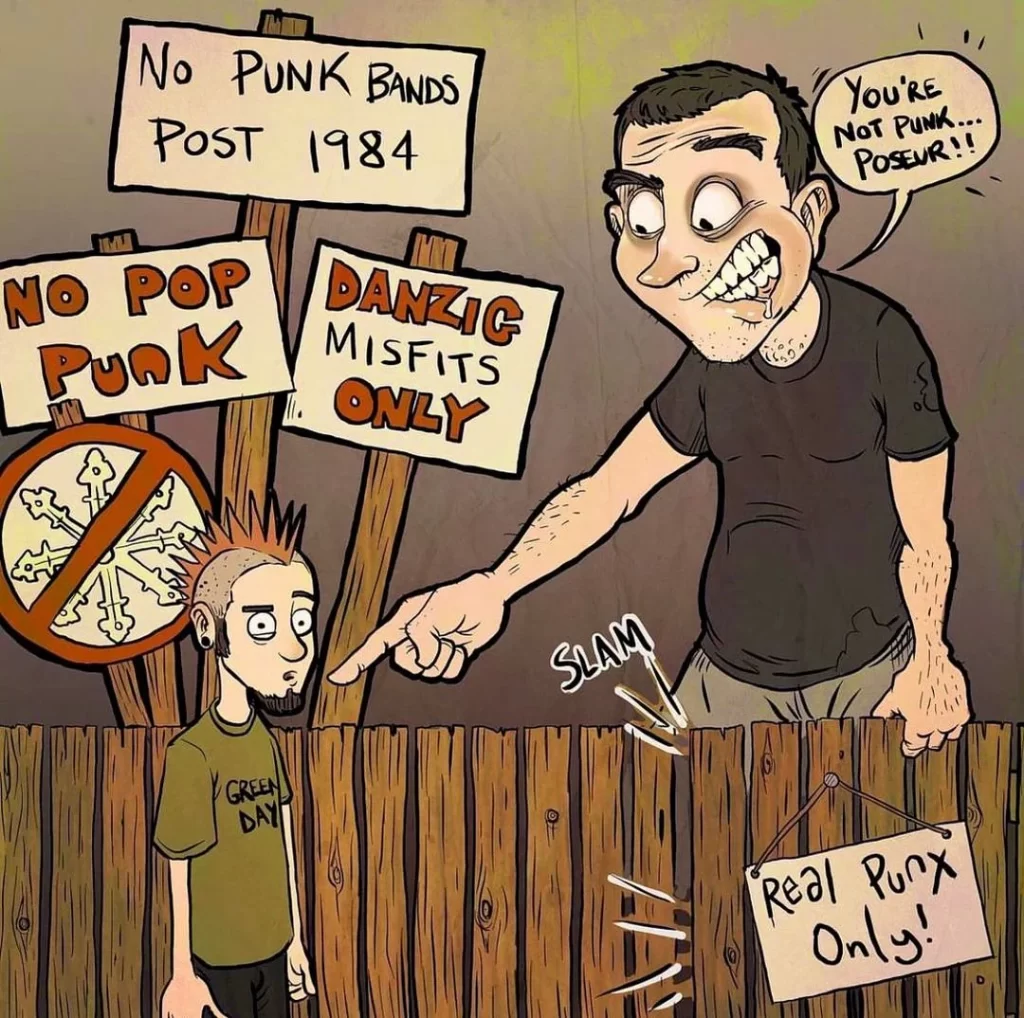
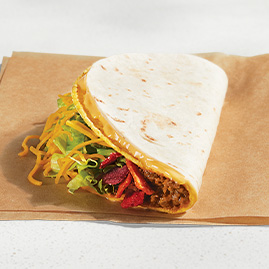
Human beings are meaning makers. People ascribe meaning to things that do not have any inherent meaning, and this is a process that happens to just about anything. Critical aspects of contemporary human society like gender and money are created through the meaning given to the things they represent or are represented by. Authenticity is a part of this meaning making (Haenfler, 2013). Authentic is defined by the Oxford Dictionary as, “of undisputed origin; genuine,” while authenticity is defined as, “The quality of being authentic.” Authenticity is something is that is ascribed to a person, place, or thing when it has been deemed authentic. When something is authentic, it is legitimate. To seek out authentic food, or music, or some other form of culture is to attempt to experience that culture in its “realest” form, undiluted by outside influences. Thus, one might think of authenticity as a spectrum; some things can be more authentic than others. If ultra processed fast food like Taco Bell is an inauthentic way of experiencing tacos, travelling to Mexico to try tacos made by the culture that invented the food is at the other end of the spectrum.
A marker of authenticity is generally a good thing, it is sought after and coveted (Williams and Schwarz, 2020). Specific values categorize subcultural identity through interactions and the judgements that subculturalists perform with one another (Williams and Schwarz, 2020). It is in these interactive modes that authenticity comes to dictate as an underlying currency (Haenfler 2013; Thornton 1996; Bourdieu 1994). Yet, it’s important to acknowledge that as a social construct, authenticity doesn’t inherently exist (Haenfler, 2013). The meanings and markers that are used to identify authenticity are things dictated by human ideas and thought, which are separate from the actual intrinsic properties of the subjects in question.
The meso, or small group level, is where authenticity is most apparent. It is within small enclaves of subculturists, whether at a party, a friend’s gig, or interacting on a forum/social media that individuals from similar groupings are going to negotiate some external rubric for what an authentic “X” is.
Subcultures tend to bubble into reality through relatively sudden or strong occurrences, whether it be dramatic events that cleave communities, like war and gentrification, or ones that create spaces that were not available prior, such as major civil legislations, the internet, or private access to equipment to make distributable objects.
This early inception plays a major role in the trajectory of a subculture in terms of what can be acceptable for its supposed members. Images of authenticity remain relatively stable as a result. Sudden and dramatic attempts to change the subcultural rubric tends to get equal, if not stronger, responses from the larger community (Daschuk 2011). The reinforcement and emblem-ication of these events burn new long-term hallmarks into the subcultural memory, strengthening or weakening old roles based on the victorious group over authentic say and the creation of new signals, remarks, and narratives for “true” subculturalists to communicate their knowledge (Daschuk 2011). This ties in with Epstein (2003)’s conceptualization of implementation of authenticity, where older members bear original and prized knowledge of the group, which they can measure newer members against by their lack thereof (Daschuk 2011). Just as there are authenticity claims to a lack of real subcultural knowledge, there too are claims toward possessed “fake knowledge”, especially on the topic of consumerism. Claims to consumerism are a common action. Members who try too hard to “be” the subcultural rubric through their clothes or purchasing history, as compared to those who “do” via an immaterial embodiment of the subculture’s underlying philosophy (Widdicombe and Wooffitt 1990), get thrown into the terribly/terrifically arbitrary bin of “hipster”. The use of hipster can be seen as a symbolic war between the old and new generations of outsiders. As one demographic has built for themselves subcultural wealth that makes them feel comfortable, recognized, and self-realized (Blunden 1995), different appearances staking the same claim to the group appears as a threat in status.
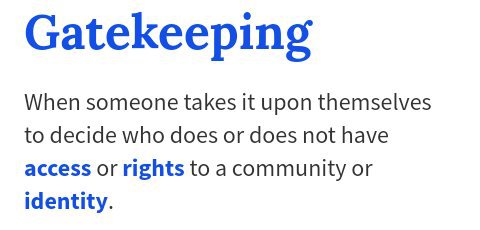
Not all, or even many, individuals are knowingly trying to horde some intangible material, however. The monetary language of Bourdieu’s taste, while undeniably helpful, should not be taken for face value in its applications. A more appropriate perspective on the drives for gatekeeping is of taste/subcultural capital not being the end goal itself, but rather the means toward it. To adopt social philosopher Axel Honneth’s seminal theory (Blunden, 1995), subculturalists wish to protect a group consensus of what authentic membership is that gives rise to recognition in solidarity by steering perceptions of membership in a direction they correspond with. Humans innately desire recognition from one another, and it is through this perception of recognition that we are able to realize ourselves in totality, unbridled by stigma or doubt. In solidarity, small groups find recognition through seeing shared experiences, attitudes, and the like in others (Blunden, 1995). When an established subculturalist perceives new members as lacking those elements for solidarity, they come off as detractors to their own recognition and may be limited in giving recognition toward them. It is in this problem of bias for recognition that the hostile and ultimately superficial matter of gatekeeping emerges to prevent the former and promise the ladder.
Subcultures respond to the commodification of everyday life in two ways: “the culture of deconstruction” or the “culture of authenticity.” Deconstruction represents the idea of meaninglessness whether in cultures or individualistic. Authenticity represents the idea that such cultures can be a means to find meaning and sincerity in a world so devoid of such concepts (Moore, 2004). According to this theory, subculturists respond in two drastically different ways to the changes of the world, and authenticity seems to be the more optimistic notion. It is not inherently optimistic to be authentic. However, the means by which subculturists attempt to find authenticity separates them from prevailing culture, which has haunted youth subculturists for decades.
Modern internet culture makes it incredibly easy for groups to interact. Many groups have forums on which members can contribute their ideas and interactions with the subculture. The anonymity of online culture, though, permits users to choose whether to associate with a certain group. Only outspoken members or those who choose to be openly part of a subculture will exploit their identity as a member. Because many internet users will shift between groups frequently, only core members remain (Williams, 2005). Those members are those with the “most authenticity.” However, it can permit levels of authenticity to those who may not necessarily be as involved in the subculture as core members. Those shifting members may be able to gain subcultural capital, leave, and repeat such a process elsewhere. One could view this as a deceitful way to become something these people are not, but it is generally a means for inclusion.
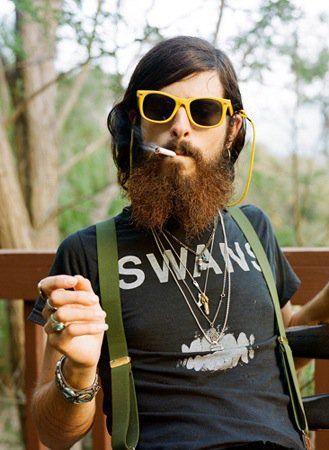
An individual may receive accusations of being a “poseur” should they display qualities contrary to the ideals of the accuser (Haenfler, 2013). The accuser, in this case, is the member with subcultural capital that they wish to protect. They likely fear the idea that this “poseur” could have a negative impact on the ideals, status, or validity of the subculture. A rapper who performs generally for the entertainment for a white audience may be considered a poseur or a sell-out by others in the hip-hop community (Moore, 2005). In performing for such an audience, said rapper compromises the ideals of some individuals in the subculture. Many found that hip-hop was Black music, so when white people try to assimilate it, it loses its validity as a Black artform. On the other hand, if a punk enthusiast were to go completely over-the-top with clothing, makeup, etc., some might question their authenticity despite seeming more authentic to an outsider. To subculturists, it is not just about the representation but also the personal connection to the culture.
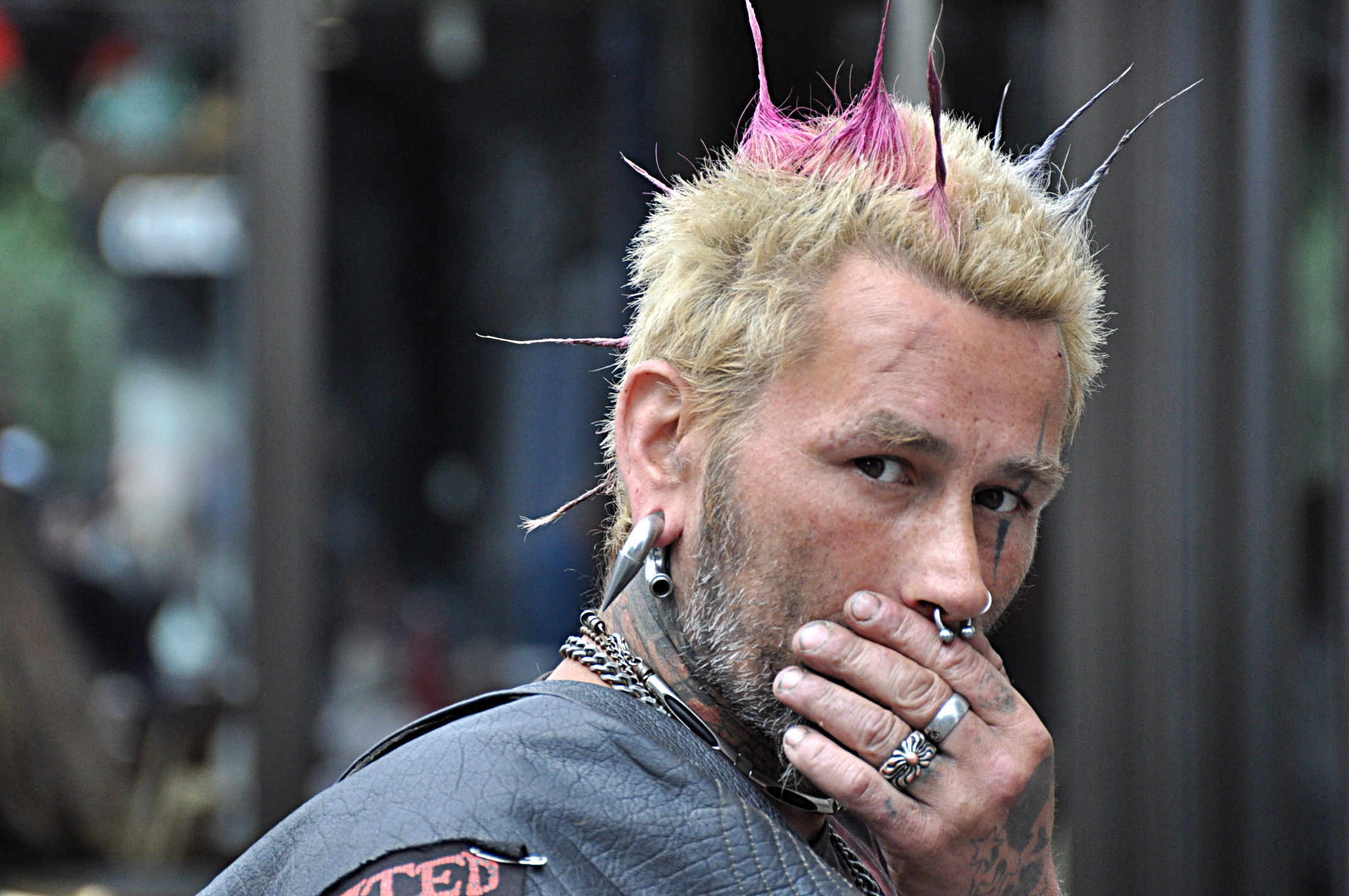
Overperforming raises a flag to other subculturists. So long as such enthusiasm as taken as passion and not as a form of compromising the validity of the subculture, attempts to integrate will not be cause for accusation of being a poseur. For authentic subculturists, a subculture is a place or a means for them to be accepted. When poseurs abuse their ideas for profit, labels like “poseur” or “sell-out” become a necessity for maintaining their group authenticity.
The internet has become a way for individuals to submerge themselves in community and pass through cultural boundaries. Those individuals, combined with the motives of the core members of an existing subculture, are what make groups in their entirety “authentic.”
Subcultures’ battles for authenticity help create a collective identity – a means by which a group can call themselves something different from another. This helps a subculture gain members as well as avoid certain individuals. Such boundaries are necessary to maintain an understanding of the subculture. Without such boundaries, the subculture would inevitably merge with other subcultures or mainstream culture. They must have their way of distinguishing themselves from outsiders, or there would be no means of claiming it to be a subculture at all. “If anyone and anything can be goth, then being goth means nothing” (Haenfler, 2013). Though many subcultures dislike labelling, their need to differentiate themselves from other cultures to establish authenticity is paramount.
As previously elaborated, authenticity claims surrounding appearances of new subcultural members often have to do with the older challenging the newer over appearance, as most surface-level claims of consumerism can be chalked up to biased revisionism (Haenfler 2014), a conflict of recognition (Blunden 1995), or due to their newness and historical difference of entry may simply not embody or “be” the subculture properly yet (Widdicombe and Wooffitt 1990). Yet the admittance to the weakness of some claims about consumption does not necessarily mean it is all vapid. As subcultures linger across generations and historic events, the shock factor(s) inevitably dilute in power. Culture grows around the subculture, through the young members scattering throughout society (especially in power of media) and the gradual infiltration of subcultural spaces by media agents, such as talent acquisition and marketing (Oakes 2009). Metaphorically speaking, dominant society acts like an amoeba to the rogue subculture, enveloping the opposing body and slowly breaking its edges down, something which early critical theorist Herbert Marcuse (2003) predicts would occur.
As mainstream society removes a subculture’s edge via acknowledgement and mainstream market inclusion new members risk less controversy in joining. New entries thus have to do less to lay claim to a subculture (Widdicombe and Wooffitt 1990; Daschuk 2011). Returning to a recognition viewpoint, net-group solidarity for subcultures dampens significantly as entry eases, since individuals require less distinctive decisions to have come to their subcultural identity. Those who have more severe conflicts with dominant society, in terms of material conditions or intellectual stances, feel the grip loosen on a vital source of connection due to the actions of individuals who may receive, at least from their viewpoint, ample recognition from mainstream pathways.
Commodification thus stands in a grey area. More people can access the lifestyles, rituals, and philosophies of (most) all subcultures. On the other hand. however, the point of subculture weakens for many, especially established members. One way to decide if commodification has been mostly a net-positive or not for a specific subculture would be to compare key material stances from before commodification began *something that there is no 100% correct answer for but can be made accurate given there is proper research on its history*, where it generally stands now, and if the reality of that material issue had changed for the better to support the softening of the subculture’s edges. For example, since wealth inequality has gotten worse (in the West) over the past few decades, a subculture that has become less abrasive toward the matter with commodification may invite more serious critique, and can hence signal some deservingness for a question of its authenticity.
In cases of maintaining and establishing authenticity in both subcultures and popular culture, understanding the racial background of the culture is paramount for those who partake in the culture. In cases such as blues and hip hop, black musicians are generally regarded as those with more validity – they are more authentic. Though such an idea is a stereotype – a bias set in place by the history of the culture – those assumptions are prevalent when determining the authenticity of a culture. Cultural producers and consumers are able to generate “myths of authenticity” by appropriating a culture (black culture in this case).
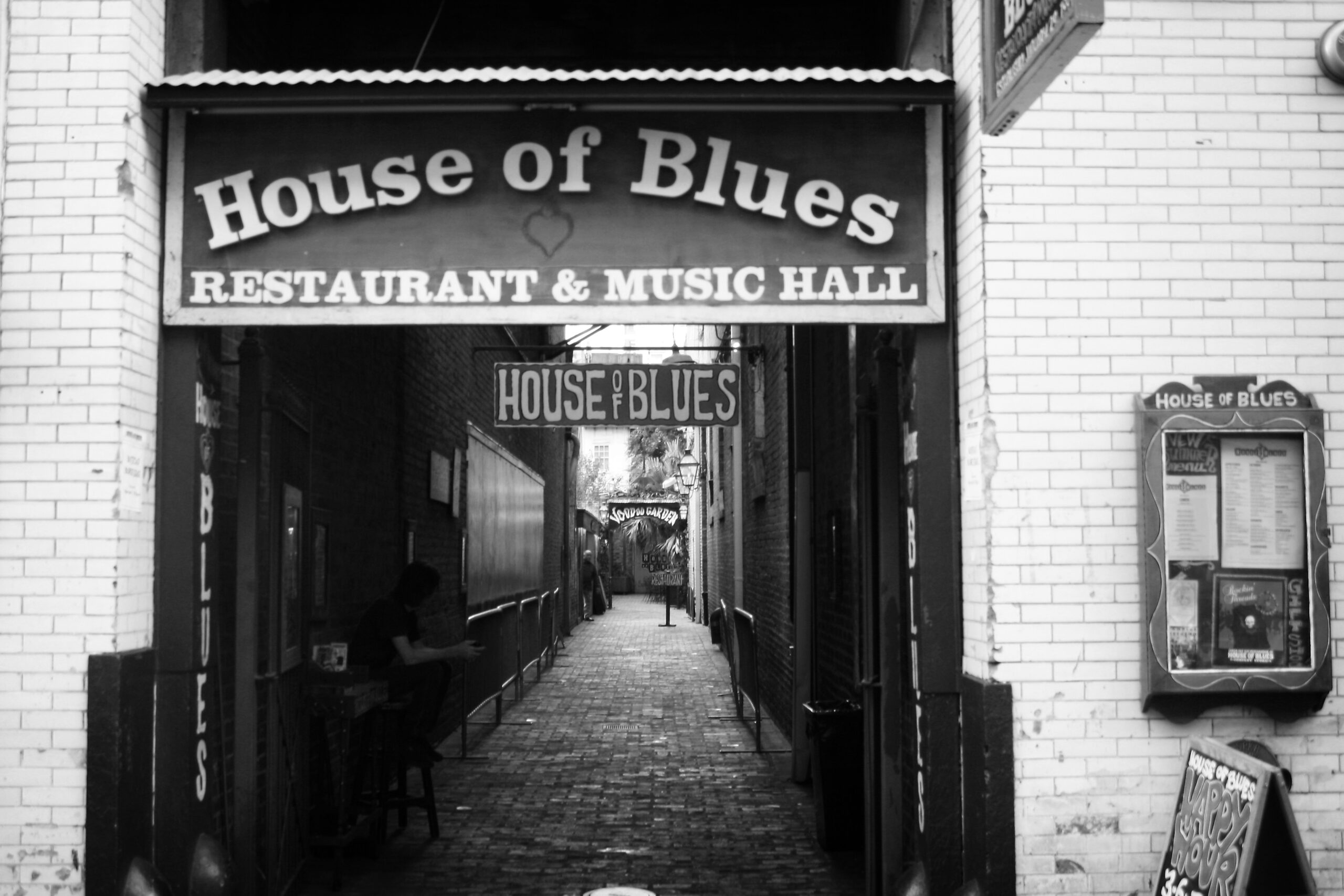
Hip hop artists in particular are able to “keep it real” by embracing their roots despite their current socio-economic status. Just as politicians are able to connect to their audience by being humble when others are watching, hip hop artists, too, take advantage of their capability to show how hard life has been – whether or not it is true. Humility has the potential to breed authenticity. Other examples of questionable authenticity include Cuban salsa dancing in entertainment districts or performing jazz concerts in a country outside the United States. Because these ideas were brought up and commodified, their authenticity can be questioned.
Sociologists of culture are tasked with the duty of demystifying the authenticity of such culture in the public light. Some may argue that a white man should not perform at a hip hop concert, while others claim that a white man has every right to the art form that a black man has. As authenticity performances continue to become more popular, so too do alternative practices that challenge such performances. These alternative practices would argue that authentic performances are bound by traditional values. Thus, the debate of progress comes into play. Should hip hop remain a genre of music for black people? Should jazz stay in New Orleans?
Rappers like Eminem permitted many to question whether or not rap would remains an exclusively Black man’s artform. Films like “8-Mile” exploited this trouble for Jimmy Smith Jr. (Eminem) to gain his authenticity in the predominantly Black subculture. That which gives Smith his authenticity is his capacity to rap quickly and on the fly. Though he is not born into the subculture, his talant- his own subcultural captial – permits him to take part in the culture.
To continue on the aspect of Kendrick Lamar and Drake’s modern rap beef, Kendrick insults Drake for not being “black enough.” Such a lyric is not necessarily pointed at Drake for being mixed, but at his incapacity to fully merge with the hip hop community because of his race. To Kendrick, Drake belongs in the pop community, and any time he tries to “act tough” and get involved with the hip hop community, he receives backlash from Kendrick himself.