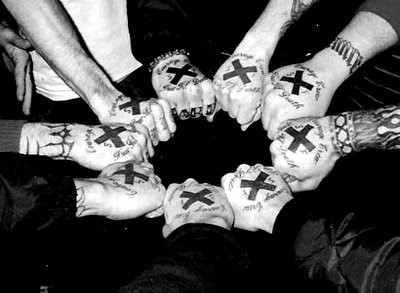
Resistance has fascinated subcultural scholars since the beginnings of the field and is argued by some to be inherent to the definition of a subculture (Haenfler 2023:19). Early work done by the Birmingham University’s Center of Contemporary Cultural Studies (CCCS) focused on explaining how and when resistance arises within subcultures. Later scholarship expanded on this topic by outlining the different forms that resistance can take within subcultures by taking a closer look at the role of the individual within subcultural resistance. What motivates members of a subculture to resist? What strategies do individuals employ to resist? These questions probe the intricacies of subcultural resistance and unveil the complex dynamics that underpin how subcultures navigate and challenge dominant norms and power structures.
The (CCCS) initially conceptualized resistance as the ways in which marginalized groups subvert mainstream ideas of normalcy through the use of style, demeanor, and vernacular (Stuart and Tony 1976:34).
This initial investigation into resistance adopted a Marxist perspective, focusing predominantly on social class and how individuals’ material conditions eventually lead to the formation of deviant groups. Subcultures, thus, were believed to be an “ideological reaction to the material conditions experienced” and were made meaningful through their relationship with dominant culture and the bourgeoisie (Williams and Hannerz 2014). The CCCS’s perspective on resistance has drawn substantial criticism from a variety of scholars who believe this view fails to fully capture the subjective components of resistance embodied by various subcultures.
Current scholars sought to remedy this by paying closer attention to the participant’s point of view, placing a greater emphasis on the subjective experience of those within a subculture rather than the broader conflict said subculture has with the dominant culture. This new approach has shown that while subcultural resistance undoubtedly has political elements, involvement in a subculture for the individual may stem from a “personal quest for individuality… rather than a collective challenge” (Haenfler 2004:408). Resistance at the individual level, thus, entails the creation of an individual identity and establishing one’s subjective experience in a context where simply existing can be a challenge. Scholars involved in this reimagining of subcultural resistance also argue that resistance can occur on many axes, not just class. For example, resistance can occur on the basis of race, gender, culture, hegemonic notions of the body, or the intersection of multiple identities. Hollander and Einwohner’s (2004) work delve into the various forms resistance can take within a subculture, chiefly the distinction between covert and overt resistance.
Overt resistance describes “behavior that is visible and readily recognized by both targets and observers as resistance” whereas covert resistance is intentional acts which goes unnoticed by targets “although [it is] recognized as resistance by other, culturally aware observers” (Hollander and Einwohner 2004:545). Seminal work by Patrick Williams (2009) argued that these definitions implicitly recognize resistance occurring simultaneously on the macro and micro level, suggesting that resistance can be multidimensional. Furthermore, the distinction between covert and overt resistance highlights the different intentions an individual engaging in resistance may have (Williams 2009:28). While it could be argued that resistance is intentional at the level of individual thought, one’s desire for recognition may not be. In this way, the concept of covert resistance better encapsulates scenarios where individuals within a subculture perceive themselves as engaging in resistance but prefer not to overtly signal it to certain external observers. Below, we list subcultural examples where William’s multidimensional model of resistance manifests.
The study of class resistance has long been a focus of subcultural resistance. For example, the punks, who notably have working-class origins, have a long history of resisting capitalism. With their tradition of DIY (Do-It-Yourself) ethic beginning in the 1970s, punks have resisted capitalism through their style, that is through the production of their own clothing, as well as through their media, such as music (Liptrot 2014). This emphasis on DIY was further developed among anarcho-punks in Britain and hardcore punks in the United States, and has since spread globally.
In a capitalist society, the working class internalizes and comes to believe in capitalist values, such as the overconsumption of goods, in what is known as cultural hegemony. DIY among punks directly opposes cultural hegemony as they engage in self-expression and creativity. Furthermore, as much as punks value individuality, punks resist the value of hyperindividualism present in capitalist societies since they often collaborate with each other in the DIY process, such as in punk bands creating and performing music together or in the creation and distribution of zines.
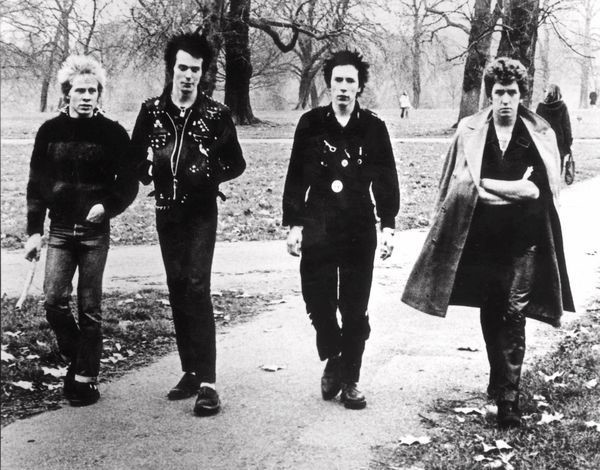
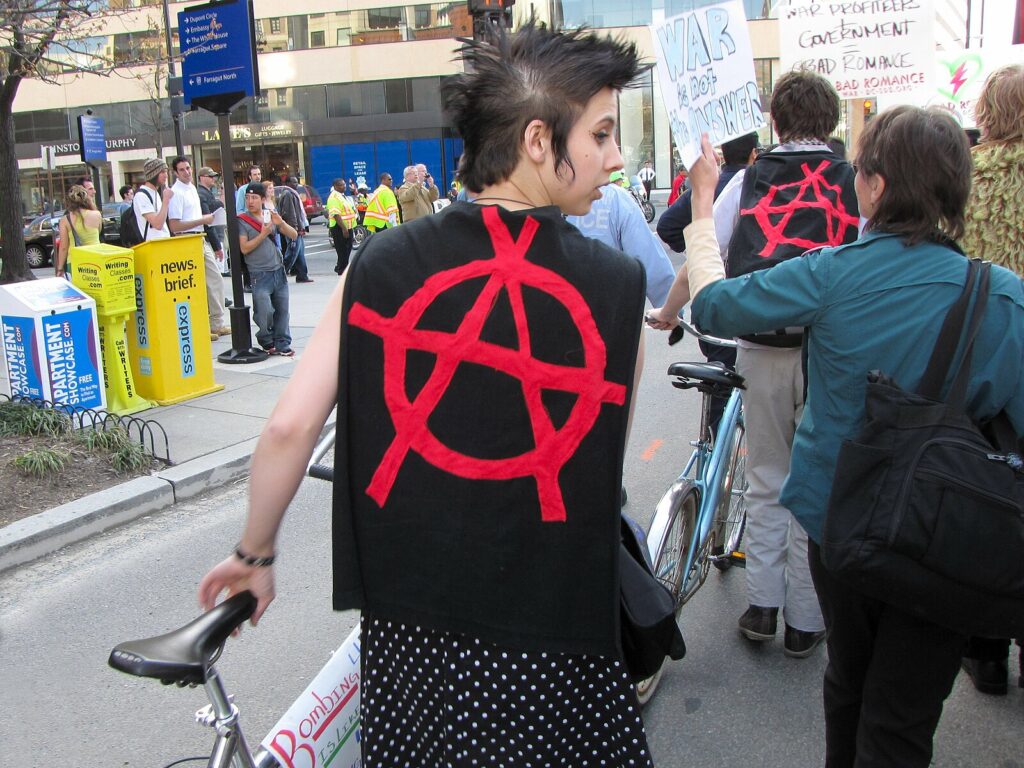
Punks also have a history of engaging in class and race resistance through their political affiliation and participation in movements. Punks around the world have had ties to anarchist, anti-fascist, antiracist, and anti-war movements. In the UK, anarcho-punks wear the anarchist symbol on their clothes and have opposed the monarchy through music like “God Save the Queen” by the Sex Pistols.
They were also involved in Rock Against Racism, and the media they produced, such as their zines, contributed to the ability for people to mobilize and take action in the movement (Haenfler 2023).
In the US, punks have been active in peace movements opposing wars with Iran and Vietnam, for example, even taking inspiration from UK punks to Rock Against Reagan (Mattson 2001). They used the websites, music, and concerts to raise money in order to promote political participation as well as anti-war and pro-peace messages. Punks have also combatted fascism from neo-Nazis within and without the punk subculture, such as the Nazi punks. Green Day famously performed at the 2016 American Music Awards, chanting “No Trump, no KKK, no fascist USA” in the middle of their song “Bang Bang”. Together, with DIY ethic, collectivist values, and political involvement, punks have opposed and disrupted the cultural hegemony and engaged in class resistance.
Another subculture engaged in resistance to capitalism, as well as racism, is hip hop. With origins in South Bronx, New York City, hip hop began among primarily Black youth in the 1970s, a time characterized by social issues such as widespread poverty, the drug epidemic, police brutality, and general inequities along the lines of race and class (Aldrige 2005). Hip hop, which consists of breakdance, graffiti, DJ-ing, and rapping, like any subculture, provides a means through which individuals can express themselves and opposition to the status quo. Particularly through music, rappers and rap groups detail their lived reality of police brutality, such as N.W.A. for example, and express their discontent at the state of racial and class relations, such as KRS-One and Black Star. Their commentary also directly references events or figures from the Civil Rights or Black Power movements, building a link between resistance from the past and present.
This practice extends to modern-day, with artists who have created protest songs in the midst of the Black Lives Matter movement, like Childish Gambino with his song “This is America” and Lil Baby with “The Bigger Picture”.
Resistance based on gender and sexuality can play a role in any subculture, but some subcultures’ existence revolves around and relies upon this resistance. For example, the feminist punk subculture Riot Grrrl (see page: Riot Grrrl 1) is centered around women and girls’ experiences with oppression and exclusion concerning punk and everyday life. Riot Grrrl arose in tandem with 3rd wave feminism, a movement concerned with empowering women in the workplace and uplifting women in positions of power, both beginning in the 1990s. Bands like Bikini Kill (video below) led the movement with their feminist lyrics and culture, like encouraging women to stand in the front of the pit and men to take more of a backseat role.
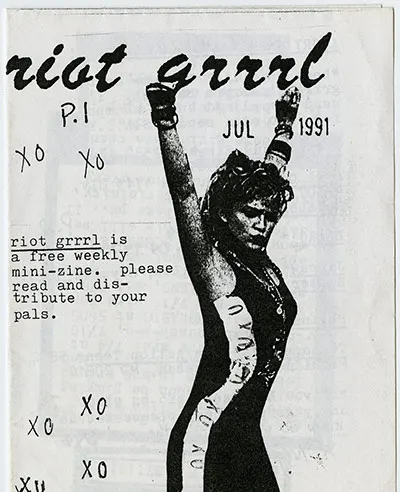
Consistent with current subcultural theory, resistance in Riot Grrrl can be attributed to personal pursuits or collective goals. Many times, an act stemming from a personal objective can impact the subculture as a whole. For example, Riot Grrrls produce Zines, a form of DIY printed booklets or mini magazines, some of which speak about their personal struggles as girls (Nguyen, 2012). By publishing these zines, girls everywhere can feel validated and empowered through their shared experiences, a form of resistance. Zines address taboo issues, especially for girls, such as sex, sexual abuse, self-mutilation, and puberty (Schilt, 2003: 83). Reading zines about others’ experiences of something like sexual abuse, for example, could reduce stigma related to the topic, and therefore increase the likelihood of a girl recognizing an experience of sexual abuse and reporting it – a very clear form of resistance that can lead to global change. Below are examples of Riot Grrrl zines.
Participants in subcultures both resist and reinforce mainstream society and expectations. As another example, swingers, or couples who engage in sex with one or more other couples, both resist and reinforce aspects of monogamy. They resist the cultural expectation of monogamy, or only having sex or romantic feelings with one other person, since they are having sex with, usually, four or more people. Although behind closed doors swingers resist this norm, most remain romantically committed to one person, keeping one foot in the door of monogamous privilege, and therefore reinforcing monogamy as the standard.
Music video for the UK punk band Sex Pistol’s song “God Save the Queen”. This song was released in 1977 and initially was banned by UK radio stations for its criticism of the monarchy.
American punk band Green Day performs their song “Bang Bang,” but deviate from the original lyrics to promote an anti-fascist, anti-racist message.
American rapper Childish Gambino overtly challenges race relations in the U.S., referencing police brutality and systemic racism. The music video notably contains symbols from the Jim Crow era for example, to highlight the links between racial oppression historically until today.
American rapper Lil Baby shows a clear link between hip hop and activism with his participation in the Black Lives Matter demonstrations.
This video by Genius discusses examples of modern-day hip hop artists who engage in political resistance, as well as how people involved in political and social movements use hip hop to empower themselves.
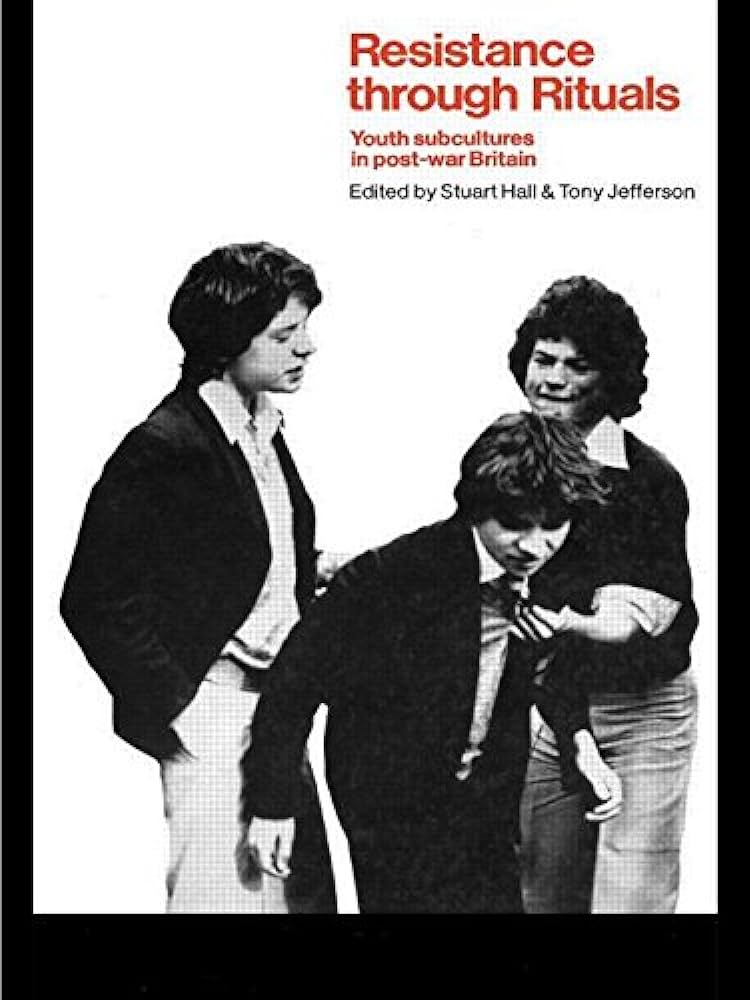
This book is one of the first works of scholarship focused on studying resistance within the context of subcultures. Hall and Jefferson take a Marxian approach in their book by investigating how material conditions can lead to deviant behavior within groups.
Patrick Williams “The Multi-Dimensionality of Resistance in Subcultural Studies”
This article examines how sociologists categorize resistance into macro/micro, passive/active, and overt/covert distinctions. In this book, Williams emphasises that these categories should not be seen as distinct compartments, but rather as points along a continuum.
Jocelyn A. Hollander and Rachel L. Einwohner “Conceptualizing Resistance”
This article highlights the broad usage of the term “resistance” in sociological literature, suggesting that its meaning has become increasingly vague. Einwohner and Hollander analyze this literature and identify two consistent elements across various contexts: opposition and action. They also explore sources of confusion surrounding the definition of resistance, pointing to issues such as the distinction between recognition and intent.
Davis, Yanni. Delborne, Ramona. Stefanoff, David. Spring 2024. “Subcultures, Resistance, and Social Change” in Subcultures and Sociology.