




Indie, short for “independent” music, has come to bear multiple definitions. Historically indie meant that a musician/band performs and distributes content without financial or social assistance from a record label (Oakes 2009). In recent years, indie is more commonly used in reference to a broad, multi-genre sound and/or aesthetic (Oakes 2009). These definitions are not exclusive from one another, and both share an underlying do-it-yourself (DIY) ethos of self-expression (McKenty 2023). Yet the change in predominant meaning did not happen without reason, and is deeply situated in the historical development of commercial music and subversive expression within commodified spheres itself.
The origins of indie lay in the late 1970’s to early 80’s (McKenty 2023). In the wake of commercialized music’s boom, the market for consumption skyrocketed, creating available outlets to perform, produce, and distribute without the need for a label contract like never before. With this degree of access, musicians could come together and express themselves independent of mass market approval for a record deal, or the control over their labor the label would get to ensure that appeal— assuming they had the grit to gather funds independently and live far below the living standards of your average rock or pop star.
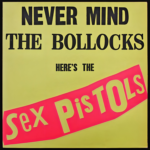
Indie’s roots are distinctly punk, as many of its pioneers like The Buzzcocks, Black Flag, Minutemen, The Replacements, and Sonic Youth drew inspiration from the giants of punk like The Sex Pistols and the underlying ethics guiding punk culture to this day (Oakes 2009; Marcus 1998). Punk itself is based on deeply Marxist perspectives. To maintain ownership of capital, control of the people’s minds are also needed. Thus society is developed on the principle of enforcing the separation of the non-elite from their material labor and their right to create cultural meanings astray from that set forth for them (Marcus 1998). For the punk, to resist and regain power over one’s life is to be a “thief or a terrorist” toward the established norms and hegemonic powers (Hoffman 1987, as cited in Marcus 1998, p.178). In praxis, the objective of the punk, or any expression-based subverter, is to momentarily redefine the “rules of the game” of everyday life, rejecting capitalistic hegemony by choosing how they wish to “play” so that within however short a crop of time before dominant society tears it down they may live to the fullest that humans ought (Debord 1957). Notable hubs of indie activity include Berkeley, LA’s overlooked suburbs, Brooklynn, East London, and Manchester.
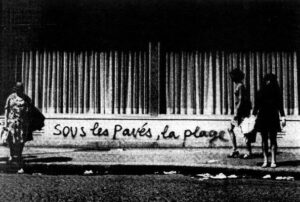
This punk ethos fits nicely to Hebdige’s theory of subculture as style (1979). Through this framework, punk philosophy of subversion takes the role of a means to capture forms of culture and redefine it as an act of symbolic resistance, so to set themselves somewhat succinctly against dominant culture (Hebdige 1979, p.80). With this model of subculture, it is only rational that punks would jump on the opportunity to maneuver sonic expression without the need of a market overseer permitted to constrain their means of expression/praxis.
During this short-lived waxing phase, the indie DIY ethos became a more predominant, less aggressive/post-punk method for performers to create their own meaning against the mainstream. The early phase was highly characterized by geography, as the financial drawback to “jamming Eccono” (Oakes 2009, p.52) and general scarcity of individual capital of all sorts necessitated tight-knit networks to operate. Or inversely, early indie scenes can be seen as a post-punk development to the networks that prior scenes laid the foundations for as subcultural communities continue their practice in spite of shifting tastes, inspirations, and political climates (Marcus 1998).
Those aforementioned indie pioneers would develop varying levels of fame and notoriety over the following years, alongside a proliferating cast of new faces and names to the roster of indie modus operandi. Growth can be traced to a multitude of sources. Among organizational explanations for these changes are two notable frames. First is that of economic institutional action. Through the recessions of the late 80’s and 90’s, many small indie labels would be bought out by notable competitors or would come to rely on contracts for bigger label’s services to distribute and tour their agents (Oakes 2009). The other frame being that indie’s growth through the late 20th century has to do with a growingly meritocratic society, where affiliations and gestures by a person’s consumption construe themselves to a fluid position of intellectual superiority that actors feel a distinct need to climb (Polhemus 1998; Brooks 2000). These frames are non-rival, and a truth of the matter likely lies in a mixture between the two.
Two distinct events would spur a critical point for the idea of expression that was indie. First was the creation of the C86 cassette by NME Magazine (Crawshaw 2020). In a pre-streaming era, convenient means to sample new music were hard to come by, so when the prospect of curated compilations was started by NME with C81, it drew mass appeal, ensuing a compilation war between music publishers (Crawshaw 2020). NME would scout out a compilation of similarly-sounding indie rockers in the making of C86, as an attempt to formulate indie as a sound-specific genre and to be used as a pushback against growing popularity of hip-hop for an edge; it would be a smashing success (Crawshaw 2020). Parallel to C86 were the respective explosions in popularity of grunge in America and Britipop in Britain & Europe (SharePro 2023; Oakes 2009). This sudden phenomena of mainstream acceptance and spectacularization for Olympia, Athens, Manchester, and other indie scenes were not due to their respective small labels, or by the explicit intent of the members themselves to grow, rather it was too caused by unprecedented inclusion into popular media through T.V. and publications (Oakes 2009). As such, within this period indie quickly began its incline into the mainstream and away from its founding ideology due to cultural and economic forces.
Spectacularization and widespread acceptance of indie has continued with the 2000’s and so forth. Namely, the 2000’s saw numerous instances of indie’s inclusion in popular media and commercials, often used as connotation for a reclined and hip youth (Oakes 2009; McKenty 2023). Alongside media inclusion as marketing, indie itself continued to morph. The genre-making from prior decades, alongside inspiration by older indie icons would lead indie (mostly) down a pigeon-hole into a general sound and aesthetic, characterized by twinkly guitars, sad yet largely non-political lyrics, and lo-fi production relaxing the stringent formulas of pop (McKenty 2023; SharePro 2023). Major recording labels simultaneously would continue their absorption of indie labels (Oakes 2009). This process of acceptance and dilution would best be characterized as methods of incorporation, where elements, symbology, and routines of subcultures are inundated to dominant society, either by ideology or commodity (Hebdige 1979). In the case of indie, meritocratic consumer culture and the market forces that guide it have subsumed the originally self-making ethos into an aesthetic of commodity, where individual consumers can shop for an identity that is set somewhat adjacent to mainstream society, but without substantive material or intellectual challenges toward the mainstream, which in the case of current-day indie would best be described by the hipster phenomenon (Polhemus 1998; Brooks 2001; Oakes 2009). These “cultural shoppers” morph do-it-yourself into a market trend of purchased access to premade means of expression and differentiation. Blame on the consumer wholly is not the exact root, however, as the cause for such misconstruction would not have taken the place of indie ethos if not for corporate capture from the beginning.
“A long look at the billboards
That swallow the air so you can’t ignore ’em
And glamorize department store crust-punk-chic
‘Cause Satan’s trending up and it’s fashion week
But this is not a movement
It’s just careful entertainment
For an easy demographic
In our sweatshop denim jackets
And we’ll wonder what just happened
When the world becomes Manhattan
Where the banks steal the apartments
Just to render them abandoned”
– Jeff Rosenstock, Festival Song
The hope of this page is to illustrate the submerged history of indie, and demonstrate that it is not a genre, nor f0r that reason even a true subculture in-of-itself. Rather, indie is a subcultural ethos for creatives to abstain from corporate production and retain control of creative direction. The concept of indie as a genre is a byproduct from decades of corporate capture and cultural shifts, to make something that is distinctly marketable to a demographic seeking symbols of difference. In this light, I hope to alert readers to think critically about how categories come to form and who/what stands to benefit from the belief in them.
Indie’s roots lay in its interactions and dynamics with financial institutions, as it centers around a rejection of the persistent need in capitalist society for financial elites to approve of your intellectual/artistic product to gain access to the capital necessary to share it (Horkheimer et al. 2002). During its pre-defusion phase, indie was characterized by an assemblage of spaces across the world where individuals could rebel against such an economic rationale that would dare limit their means of self-determination. In these spaces, the predefinitions filtered through social and economic class which influence how individuals may or may not live are absolved. Resultingly, indie music scenes and spaces were unique in their manner of dissolving the saliency of class. As genre-fication and corporate capture took over the concept of indie, however, it would change the term’s impact on class. Namely, with the ascension of meritocracy, it became fashionable to be different, not only dissolving the subversive elements of many subcultures into the current post-subculture age but also hallowing out any facets to subcultural styles that may contradict the meritocratic drive for stratification through the categories of what they consume (Hebdige 1979; Brooks 2000; McKenty 2023). In its current popular understandings and purposes, indie thus serves an inverted purpose as a middle-and-up-class token of social capital to denote thoughtful consumption that does little in the way of substantively challenging the mainstream it is still set against, yet only in aesthetic measure (Brooks 2000; McKenty 2023).
The spaces artistic bodies inhabit play a pivotal role in the formation and spread of its contents. Sociopolitical struggles such as gentrification and disenfranchisement in working-class and/or art-centered areas would create tensions for expression that went against the perceived opposition’s tastes. Hence why places like Berkeley, Brooklyn, and Manchester would become Meccas for indie. In these formative local indie scenes, musicians could retain local culture and resist musical hegemonic forces of pop and hair metal through shared networks of representation (Oakes 2009; Klassen 2012). As gentrification ramped up in the 21st century to unprecedented levels, much of the indie local scenes in these hotspots have faded to relative obscurity. While not receiving the same degree of notoriety, exposure, or glamor, rural regions have become strongholds for the indie modus operandi (Oakes 2009; Buckner 2020). Reason being that rural areas often go overlooked by industry agents who may otherwise give them the label deals, spots on shows, or commissions for commercials that— alongside other economic factors— have deteriorated larger indie scenes (Buckner 2020). With an age of social media supremacy, though, how spaces or scenes are conceptualized must shift to accurately comprehend how indie may form and be formed by the online frontiers and through the algorithms of feeds. One potent stronghold for online indie development would be the web service Bandcamp, where small creators are given center stage and easy access is made for personal interaction between musicians and their audience.
McKenty, Flinn “The Punk Rock MBA”. Aug.9, 2023. “The Painful Death of Indie Rock“. You-Tube. Retrieved Mar.14,2024. https://youtu.be/ILBSvoeXh8A?si=GM3fb9H64R9jOT5w
Buckner, LA. May.18,2020. “Is Indie Music a Genre? (feat.Chris Christopherson). You-Tube. Retrieved Mar.14, 2024. https://youtu.be/OnPmc1MimRg?si=l5SB4J7Ff6t9xhf4
Lovelace, Will. Oct.6,2022. “Meet Me in The Bathroom | Official Trailer | Utopia“. You-Tube. Retrieved Mar.17, 2024. https://youtu.be/UgHN-YE7IPI?si=7lNMxZ6KO2uVQFNZ
Oakes, Kaya. 2009. Slanted and Enchanted the evolution of indie culture. New York: Henry Holt and Company.
Berkeley professor Kaya Oakes presents a succinctly holistic history of the formulation for Indie as an ethos in practice through a genealogical lens in Slanted and Enchanted. The narrative takes the reader through the environmental factors that gave way to indie and historical influences on the term and/or scene.
Marcus, G. 1998. Lipstick Traces: A Secret History of the Twentieth Century. MA: Harvard University Press
Greil Marcus, a punk fan who got to see The Sex Pistols’ famous final concert, wishes to trace a “genealogy of culture” in reference to the band’s inspirations and what/how it in turn would inspire creatives in the future. The findings brought by it are expansive and thought-provoking
Horkheimer, M., Adorno, T. W., Noeri, G. S., & Jephcott E. 2002. The Culture Industry: Enlightenment as Mass Deception. In Dialectic of Enlightenment (pp. 94-136). CA Stanford University Press. https://doi.org/10.1515/9780804788090-007.
This highly influential piece of early critical theory discusses how capitalist rationale has weaponized art and entertainment into a method of ideological repression.
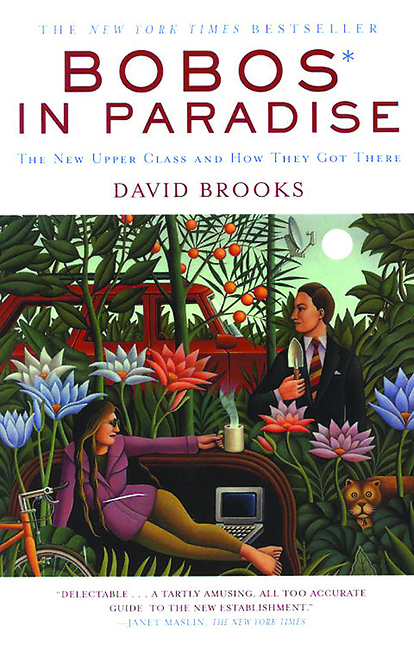
Brooks, D. 2000. Bobos in Paradise: The New Upper Class and How They Got There. New York: Simon and Schuster.
Acclaimed journalist and social critic David Brooks practices a “comic sociology” in this exploration of the changes in upper class consumptive behaviors and attitudes towards once-subversive matters. The central claim/supposed suspect in BoBos (Bohemian Bourgeois) is the post-WWII development of meritocracy and America’s ascent to superpower-dom.
Shaw, Kate. 2013. “Independent creative subcultures and why they matter”. International Journal of Culture and Policy 19(3):333-352. DOI: 10.1080/10286632.2013.788162. Accessed Feb 19, 2024.
Klassen, Aaron Joshua. 2012. “Notating Indie Culture: Aesthetics of Authenticity”. M.A. Thesis, Department of Sociology, University of Manitoba Winnipeg. https://mspace.lib.umanitoba.ca/server/api/core/bitstreams/53311b4e-864d-47d0-9c1d-79af5c62e13a/content. Accessed Feb.19, 2024.
Silver, I., Newman, G. and Small, D.A. 2021. “Inauthenticity aversion: Moral reactance toward tainted actors, actions, and objects”. Consumer Psychological Review, 4(1): 70-82. https://doi.org/10.1002/arcp.1064
Cavalcanti, Rodrigo C. T., André Souza-leäo L.M. and Bruno M. Moura. 2021. “HIPSTERS VERSUS POSERS: FANNISH SPLIT IN THE INDIE MUSIC WORLD 1.”Revista De Administração Mackenzie 22(3):1-28 (https://grinnell.idm.oclc.org/login?url=https://www.proquest.com/scholarly-journals/hipsters-versus-posers-fannish-split-indie-music/docview/2569413308/se-2). doi: https://doi.org/10.1590/1678-6971/eRAMG210202.
Dale, P. 2008. “It was easy, it was cheap, so what? Reconsidering the DIY principle of punk and indie music.” Popular Music History, 3(2): 171-193.
George, Cassidy. 2022. “Revisiting Indie Sleaze, as It Happened”.Vogue. https://www.vogue.com/article/the-cobrasnake-y2ks-archive-mark-hunter-book-indie-sleaze. Accessed Feb.18, 2024.
Saunders, Chris. 2023. “‘Meet Me in the Bathroom’ directors on 00’s indie sleaze: “There’s less of a sense of danger around music these days””. HungerTV. https://www.hungertv.com/editorial/meet-me-in-the-bathroom-directors-on-00s-indie-sleaze-theres-less-of-a-sense-of-danger-around-music-these-days/. Accessed Feb. 18, 2024.
Crawshaw, M. 2020. “C86 — The Cassette That Marked The Beginning Of Indie Pop“. IndieIsNotAGenre.com. https://www.indieisnotagenre.com/c86-the-cassette-that-marked-beginning-of-indie/#:~:text=The%20tape%20was%20intended%20as,collection%20of%20indie%20pop%20songs. Accessed Mar.14, 2024.
Kinney, F. 2023. “Did Punk Start as a Situationist Stunt?”. Jacobin. https://jacobin.com/2023/05/did-punk-start-as-a-situationist-stunt. Accessed Mar.16,2024.
Salzman, E. 2020. “Nepotism in indie music industry leads to unequal footing”. The Ithacan. https://theithacan.org/38290/life-culture/popped-culture/nepotism-in-indie-music-industry-leads-to-unequal-footing/#:~:text=While%20the%20bedroom%E2%80%93pop%20community,time%20breaking%20into%20the%20industry. Accessed Mar. 16, 2024.
SharePro. 2023. “The History and Evolution of Indie Music“. https://www.sharetopros.com/blog/the-history-and-evolution-of-indie-music.php
Hebdige, Dick. 1979. “Subculture: The Meaning of Style”. Routledge. https://doi.org/10.4324/9780203139943. Accessed Feb.23, 2024.
Ken Knabb. 1957. “Report on the Construction of Situations”, in Knabb K Situationist International Anthology: Revised and Expanded edition (2006). Bureau of Public Secrets. Accessed Mar.14, 2024. https://theanarchistlibrary.org/library/guy-debord-report-on-the-construction-of-situations
Polhemus, T. 1998. “In the Supermarket of Style”. In S Redhead, D. Wynne, and J. O’Connor (eds) The Clubcultures Reader. Blackwell, pp.148-151.
Dixon, Brandon A. 2024. “Indie Music”. Subcultures and Sociology