Urban Explorers

Table of Contents

What an UrbExer does when exploring - taking photographs
Man Taking Piture of Abandoned Sewer

Exploring... TOADS?

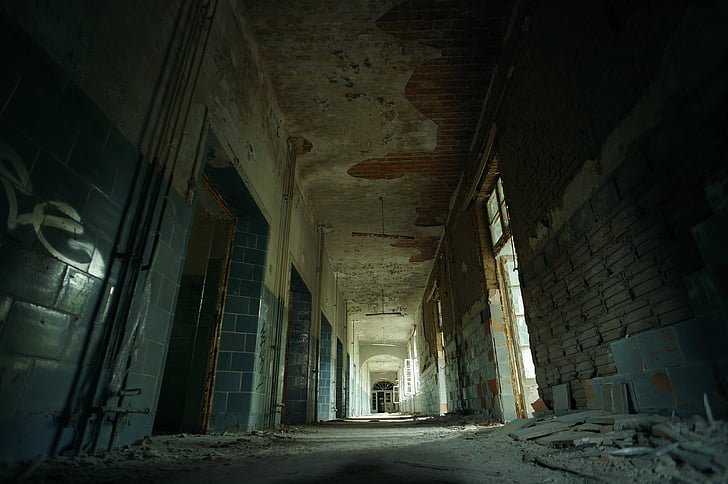
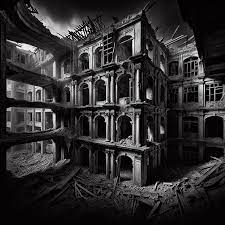
The idea of exploring TOADS (Temporary, Obsolete, Abandoned and Derelict Spaces) emerged in the 1990s and continually increased in popularity (Mott, 2014). Such spaces could include an abandoned sewer, a building that towers over a graveyard that no person dares to enter, or an old railroad that seemingly serves no purpose. To some, though, these places have a history that must be unearthed and a sense of beauty unlike any other. Who could not find beauty in a smelly, abandoned sewer? The rebellious act of exploring TOADS captured the attention of many to the point of establishing forums online and subreddits in order to create groups. Some explorers choose to traverse the TOADS alone; however, most gather into pairs or larger groups in order to increase safety. Most expeditions do require a sense of courage, which the groups are proud of because of the dangers that lie ahead. In some cases, a false step could mean death, while in others, failure to move quickly could mean a prison sentence. This excitement for danger unifies the Urban Explorers and it has become a large part of their identity (Robinson, 2015). Some ‘UrbExers’ record their explorations with photos and videos of their adventure, and many later become news stories.

Gives an example of a "TOAD," in the form of an abandoned building
Abandoned Bulding

Who Are UrbExers?

Modernity has presented many individuals of ranging social classes with the question of the meaning behind one’s life. For those who have found that the thrill of a casual life is unsatisfactory, UrbExing becomes a wonderful option to see life behind the scenes. UrbExers are fairly open to expanding their group. People of any class, race, or gender can find themselves in the Catacombs of Paris or an abandoned railroad in London. This activity is accessible for everyone, even those who grew up in lower classes and were limited by money can explore the forgotten places hidden from mundane society. Exploration is a quiet rebellion of leisure (Bingham, 2017). One may find themself in an abandoned classroom, in the pipes underground, or in a tunnel under a factory. This provides a freedom detached from the strain of finances and in most cases there is no one else to witness or hinder this exploration. Every UrbExer enters the subculture for their own reasons, whether it be a need to fit in, a thrill from risk, historical geekery, or a feeling of superiority (Kindynis, 2019). This activity is a deviant form of leisure. To those participating, it is not unlike shopping at the mall or going to the cinema. UrbExers are like all others, yet their joy happens to take them into another part of the same world that we live in.

Heterotopia

The world of an UrbExer is not like that of the average citizen. Such a world is called a “Heterotopia” or a world that is somewhat parallel to our own. That which we see, hear, and feel is different from those who have chosen to enter the depths of the unknown. This heterotopia that has been crafted of the abandoned sections and secrets of the very fabric of our “normal” society (Bingham, 2017). This alternate world calls to those who desire freedom and passion, and are willing to risk everything to explore this kind of leisure. 

Distorted Building

Spacing

UrbExers, like many other subcultures, repurpose space for their ideals. Whatever goal or mission a group of UrbExers has, they are able to repurpose such space for art, history, fun, or whatever reason they have for invading a likely derelict area. Many TOADs lack purpose without UrbExer intervention.

City Lanscape Birds eye view
City landscape

For example, an abandoned asylum, generally speaking, serves no function until people with a sense of exploration arrive. To be able to find beauty in places that – to the untrained eye – have none, is a skill that UrbExers and other subculturists like Graffiti writers and skaters have mastered. Like Graffiti writers, UrbExers believe that all space is free space (Cresswell, 1996). Such an idea emphasizes UrbExers’ and others will to roam around urban areas as a primary motivator for their actions. The way that urban areas are planned and situated permit the city to develop its own history – such may be the very nature of many Urban Explorers (Robinson, 2015).


Risks and Rewards

Because of the legal consequences associated with the exploration of TOADs, UrbExers often wear masks to hide their identity.

Man wearing ski mask
Masked man

Most pictures hide the UrbExers’ identities either with masks or by excluding any individuals from the photo. In both the United States and Canada, governments have deemed the act of Urban Exploration a threat. Romanticization of such freedom has inspired thousands to participate in UrbExing (Robinson, 2015). Exposition leads to both inspiration and fear. It is important to note that people have died while in the pursuit of such freedom, leading to a crackdown on the act of exploration. If an individual is trespassing, an officer has every right to remove them from the premises. The US Government deemed UrbExing to be a terrorist threat in 2012, as they claimed that photos could be used for terrorists to determine targets (Kindynis, 2019). Such accusations are typical of a moral panic. When people see deviant action, they find a reason to protest, and in such a protest, they create a reason for people to fear something that can cause no harm.
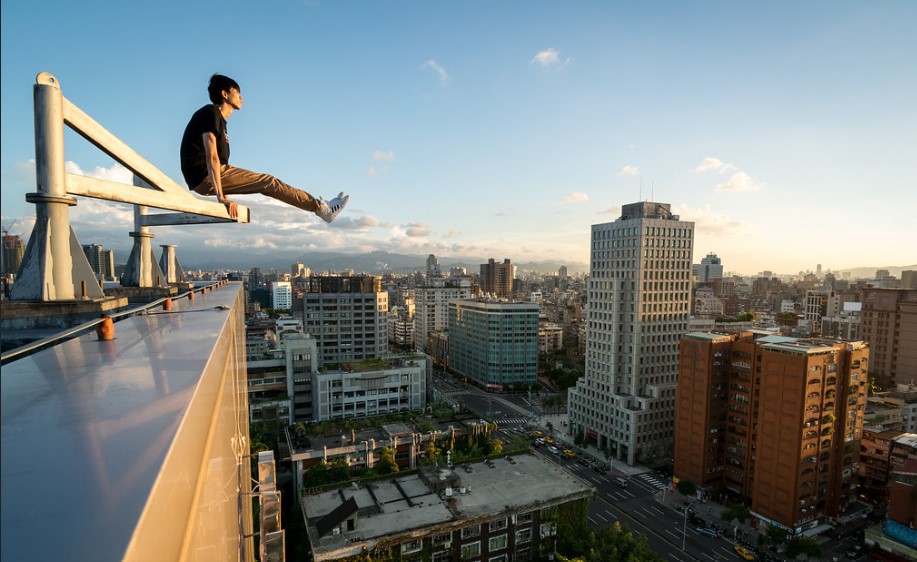

Idea of UrbExers exercising freedom in a forbidden place
Man doing parkour on top of a building

Deviance and UrbExing

Associations of UrbExers with rebellious teenagers who have no respect for safety for themselves or others is now prevalent. The misconceptions surrounding UrbExers takes away the humanity of the participants. UrbExing is not too different from someone going out to drink on a Friday night. The way most people regard explorers, however, is not as if there is no harm. Because exploring deviates from the behaviors that are often instilled in children like avoiding strangers online and not trespassing, people fear the outcomes of such ideologies. UrbExers share different ideas in different regions and not all UrbExers in a region will think alike. They all, however, consider themselves part of a ‘Daredevil’ group of individuals who are willing to explore for meaning (Bingham, 2017). Urban Exploration has become a global culture. A member from Japan and a member from London will find similarities in their behavior and ideology. In each case, the members’ senses of rebellion remain strong, whether due to a hatred of society or due to confusion with the laws of the universe.

Is UrbExing Deviant?

Just as a fearful mother might cover her child’s eyes when a man with face tattoos, she might tell her child to stay away from abandoned buildings. The idea of legally (or illegally) entering derelict places for any reason is inherently deviant. Just because it is deviant for our current societal standards does not mean it is immoral. Most UrbExers are enthusiasts. They are those with a curiosity of the past and a passion to photograph that which is forgotten (Garrett, 2010)

Man walking on abandoned building

Politics

With the rise in technological capabilites, surveillance and privacy are in the foreground of many political agendas. Those who find crimes like robbery would attempt to increase surveillance, especially in urban areas to capture criminals. UrbExers are one of many groups reacting to such government policies. UrbExers will playfully circumvent surveillance in their search for derelict beauty (Garrett, 2014). Such actions complicate the ideas of surveillance in cities. In such cases, people panic. Those who intentionally defy laws scare those who wish for those laws and regulations to be enforced. Their actions can, however, be seen as a form of heroic preservationism. A great part of UrbExing is taking back from an exclusionary private society and a government that shows no mercy to the impoverished. Exploring that which is meant to be off-limits makes it a declaration of war on that government. Because urban citizens had previously lost rights to such property, exposing it is both a means of art and protest.

Groups and Boundaries

UrbExers function as completely independent groups. One group is unlike any other, and trespassing on the territory of another group is as taboo as for a rival gang’s interference. Most groups function on a hierarchy of experience. Those who understand how to UrbEx lead those who lack such experience. When new UrbExers attempt to overthrow the hierarchy or trespass into territory without discussing with those who know if it is safe to do so, they break an unwritten code among UrbExers. One group, “The Boyz,” dealt with insubordinate new UrbExers by sending them on the most disgusting missions one could imagine. The leader, “Mayhem,” said that they “broke the rules and contaminated our society” (Bringham, 2017).

Another group, the London Consolidation Crew (LCC), functioned on a basis of constantly shifting, informal membership. The group consisted of about two dozen individuals, functioning on the outskirts of London. They took pride in taking missions that other groups would find too dangerous. The LCC explored eight countries over the course of a  few years. 

As of 2014, there were about 10,000 registered UrbExers. To say that all of these individuals are in a tightly-knit community would be beyond inaccurate. UrbExers are constantly expanding. Popularity has grown immensely within the last decade. Each group is very different. They have different codes, ideas, and motivations. All groups, however, have a mutual disapproval of fellow trespassers (Garrett, 2014).

Masculinity and Sexism

It may not be surprising to say that most of the UrbExers are men. The call of the subculture is based on risking one’s life for adventure, and most tropes within mdoern society support such an idea for young boys. However, with such a male-dominant subculture, sexism leaks fairly often. One group, the Minneapolis Urban Adventurers (MUA), describes untouched abandoned areas as “virgins” and they are the “penetrators” (Mott, 2014). Such sexist terminology contributes to a lack of female representation in many groups. Another group, Operation Penetration, describes their motives as penetrating any hole to be found. Their banner depicts a woman lying seductively.

Tourism and Research

Man taking photo of penguins in Antarctica

UrbExing has an interesting dialogue with modern sociology. The sociological reasons for utilizing abandoned spaces directly relates sociology to history, geography, and even healthcare. UrbExing is inherently a tourist phenomenon. It is exploring that which is not meant to be explored, yet there are those who seek to explore it for that very reason (Robinson, 2015). Urban Exploration and tourism have many similarities. Ideas of embodiment, authenticity, and experience give us another view into Urban Exploration – one that is slightly more accepted through another lens. Many tourists claim authenticity by purchasing goods upon their arrival into a new area. Urban Exploration challenges such commodification by relating to a more existentialist idea of connecting one’s self to the world. The previously mentioned “Heterotopia” – that which is parallel – is something that UrbExers strive for, and something to which true, authentic tourists can relate. Like tourism, UrbExing is about capturing the essence of a place. It is to be authentic in one’s being.

The views and opinions expressed on individual web pages are strictly those of their authors and are not official statements of Grinnell College. Copyright Statement.